

Check permits and tides first
Before you even think about lowering your tire pressure, you need to confirm that you are legally allowed to be there and that the sand won't disappear beneath your tires. A beach driving guide is only as good as the logistics behind it. Skipping this step is the fastest way to get a fine or, worse, get stuck when the tide comes in.
Verify local access rules
Beach driving regulations are hyper-local and change frequently. Some national seashores allow driving year-round, while coastal towns like those in the Outer Banks restrict permits to off-season months (October through April). You must check the specific website for the park, town, or county you plan to visit. Rules often dictate where you can drive (e.g., only between certain markers), speed limits, and whether a permit is required.
Note: Regulations vary by location and season; always check local park or town websites before heading out. Do not assume that because one beach allows driving, the next one over does too.
Monitor the tides
Even if you have a permit, high tide can turn a drivable beach into a muddy trap. Check the local tide schedule for your specific arrival time. Plan to drive on the hard-packed sand near the water line, but always leave a safe buffer. If the water is already close to the dunes or washing over the tire tracks, it is too late. Being stranded by rising water is not just an inconvenience; it often requires expensive towing assistance.
Lower tire pressure for grip
Releasing air from your tires is the single most important adjustment for a successful beach driving guide experience. When you drive on sand, the surface behaves like a liquid; standard tire pressure causes your vehicle to float on top rather than dig in. This "floating" effect leads to spinning wheels and getting stuck in soft dunes.
By lowering the pressure, you increase the tire's contact patch. Think of the tire as a wide shoe versus a high heel. A high heel concentrates weight on a tiny point, sinking deep and getting stuck. A wide shoe distributes that weight, allowing you to walk across the surface without sinking. The same physics applies to your vehicle. A larger footprint provides the traction needed to push forward.
For most standard 4x4 vehicles, aiming for 20 to 25 PSI is the sweet spot on firm, packed sand. If the sand is particularly soft or deep, you may need to drop lower, sometimes into the 15-18 PSI range, but always check local regulations and your vehicle's limits first. The softer the sand, the lower the pressure needed to maintain momentum.
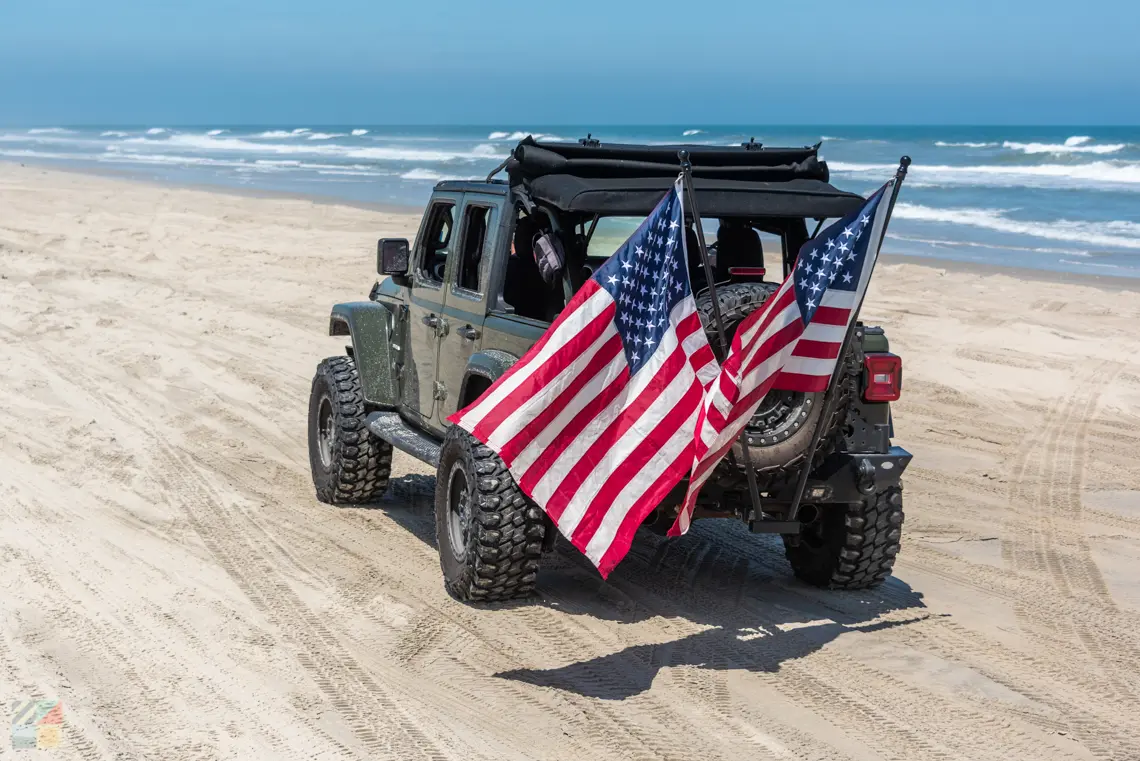
Remember to reinflate your tires before returning to paved roads. Driving on asphalt with low tire pressure causes excessive heat buildup, uneven tread wear, and potential blowouts. Carry a portable air compressor in your vehicle so you can adjust pressures on the spot as conditions change.
"Lower the pressure in all tires to a recommended 20-25 pounds before you drive onto the sand. The softer the sand, the lower the pressure needed." — Cape Lookout National Seashore
Drive with momentum and control
Driving on sand is less about horsepower and more about physics. The beach driving guide principles rely on maintaining steady momentum to keep the vehicle moving over loose surfaces. When you stop, you sink. When you accelerate too hard, you dig in. The goal is to make the vehicle feel like it is gliding rather than fighting the terrain.
Engage four-wheel drive
Before you enter the sand, switch your vehicle to four-wheel drive (4WD) or all-wheel drive (AWD). This distributes power to all four wheels, providing the traction needed to pull the vehicle forward. In deep or soft sand, locking the front differential or engaging a low-range gear can help maintain torque at lower speeds. Never attempt beach driving in two-wheel drive unless the sand is extremely firm and packed.
Aim for wet sand
Dry sand is loose and shifting, acting like ball bearings under your tires. Wet sand, found near the waterline or in compacted tracks, offers a solid foundation. Drive as close to the water as safely possible, checking tide charts beforehand to ensure you aren’t driving into the surf. If you must drive on drier sections, follow existing tracks or drive in a straight line to minimize resistance.
Keep steady speed
Maintain a consistent, moderate speed. Too slow, and you risk stalling or getting stuck; too fast, and you lose traction or risk flipping. Accelerate smoothly and gently. If you feel the tires slipping, ease off the accelerator slightly to regain grip. Avoid sudden movements that can upset the vehicle’s balance on the uneven surface.
Avoid sudden moves
Steering, braking, and accelerating inputs should be gradual. Sharp turns can cause the vehicle to dig in or roll. If you need to turn, do so slowly and with wide arcs. Braking should also be gentle; use engine braking by lifting off the accelerator whenever possible. Sudden braking can lock the wheels and send you into a slide or a hole.
Recognize and Avoid Soft Sand
The difference between a smooth beach drive and a recovery tow often comes down to sand texture. Dry, loose sand offers almost no traction, while wet, packed sand near the waterline supports vehicle weight. In this beach driving guide, prioritizing terrain awareness prevents getting stuck before it happens.
Scan the beach surface for color and texture cues. Dark, firm sand indicates moisture and compaction, providing a stable driving path. Light, pale sand is usually dry and loose, acting like a fluid that swallows tires. Always aim to drive in the wet zone where the tide has recently receded, as this packed layer holds your tires firmly.
If you encounter unexpected soft patches, do not slam the brakes or floor the accelerator. Spinning tires digs you in deeper, turning a minor issue into a major bog. Instead, ease off the gas, keep the wheels straight, and gently accelerate to maintain momentum. If you feel the vehicle sinking, stop immediately to avoid digging a hole that makes recovery difficult.
Wash the vehicle after driving
Salt and sand are the enemies of your vehicle’s finish and mechanics. Leaving them on the car after your beach driving guide adventure leads to rapid corrosion, especially on the undercarriage, brakes, and suspension components. A thorough rinse is not optional; it is the final, critical step in protecting your investment.
Start with the undercarriage. Sand packed into wheel wells and frame rails holds moisture against the metal. Use a high-pressure hose to blast away grit from these hidden areas before it settles. If you have access to an undercarriage wash bay at a car wash, use it. This single action prevents rust from forming in places you cannot easily see or reach later.
Next, wash the exterior body panels. Salt spray settles on paint, trim, and glass. Use a bucket of fresh water and car wash soap to remove the residue. Rinse thoroughly to ensure no soapy film remains, which can attract more dirt. Pay special attention to door jambs and the hood latch, where salt crystals often hide.
Finally, clean the interior. Sand tracks easily onto floor mats and seats. Vacuum thoroughly, removing all granules from crevices. Wipe down dashboard and console surfaces with a damp cloth to remove any fine dust that may have infiltrated the cabin. A clean interior ensures your next drive remains comfortable and free of abrasive grit.
Beach driving guide: common safety: what to check next
Before you head to the shoreline, it helps to clear up the most common concerns about beach driving. This section answers the practical questions beginners ask most often, ensuring your trip stays safe and compliant.
Work through The Beach Driving


No comments yet. Be the first to share your thoughts!