

Get beach driving right
Before you put your vehicle in gear, understand that sand changes how your car behaves. It is not like pavement; the surface gives way, traction drops, and momentum becomes your most valuable resource. Skipping the setup steps is the fastest way to get stuck or damage your vehicle.
Check legality and access
Not all beaches allow driving. Some areas are protected for wildlife, while others require permits. Driving on unauthorized sand can result in heavy fines. Always check local regulations before you arrive. Look for signage indicating vehicle access zones and posted speed limits. If you are unsure, ask a local ranger or visitor center. Respect closed areas to protect dunes and nesting sites.
Adjust tire pressure
This is the most critical mechanical step. Standard tire pressure will cause your tires to dig into the sand, leading to immediate entrapment. You need to lower the pressure to increase the tire's surface area, allowing it to "float" on top of the grains.
For most light trucks and SUVs, reducing pressure to 20-25 PSI is a good starting point. If the sand is very soft, you may need to go lower, but do not go below 15 PSI without specialized beadlock wheels, as the tires can unseat from the rims. Remember to reinflate your tires before returning to hard pavement.
Pack essential gear
You should never drive on the beach without recovery equipment. If you get stuck, you cannot rely on roadside assistance being nearby. Carry a high-lift jack, a recovery board (like Maxtrax), and a heavy-duty shovel. A winch with a synthetic rope is ideal for self-recovery, but a kinetic recovery rope and a second vehicle are often more practical for groups. Keep these items accessible, not buried in the trunk.
Scout the terrain
The beach is not a flat, uniform surface. Tides create ruts, dunes, and hard-packed zones. Arrive at low tide to maximize the available driving width and firmness of the sand. Avoid driving on steep dunes unless you are experienced; the angle can cause rollovers. Stick to the hard-packed sand near the water line for the best traction, and avoid wet sand that looks soft and dark.
Drive with momentum
Once you are ready, shift into a low gear for maximum torque. Maintain a steady, moderate speed. Sudden acceleration or braking will spin your tires and dig you in. If you feel the vehicle slowing down, do not panic-brake. Keep the throttle steady and steer gently. If you do get stuck, stop spinning the wheels immediately. Spin tires create holes that make recovery much harder.
Work through the steps
Beach driving requires a different approach than pavement driving. The primary keyword phrase for this guide is beach driving. Sand offers less traction and more resistance than asphalt. You need to adjust your vehicle and your driving style to handle the shifting surface. Follow these steps to drive safely and avoid getting stuck.
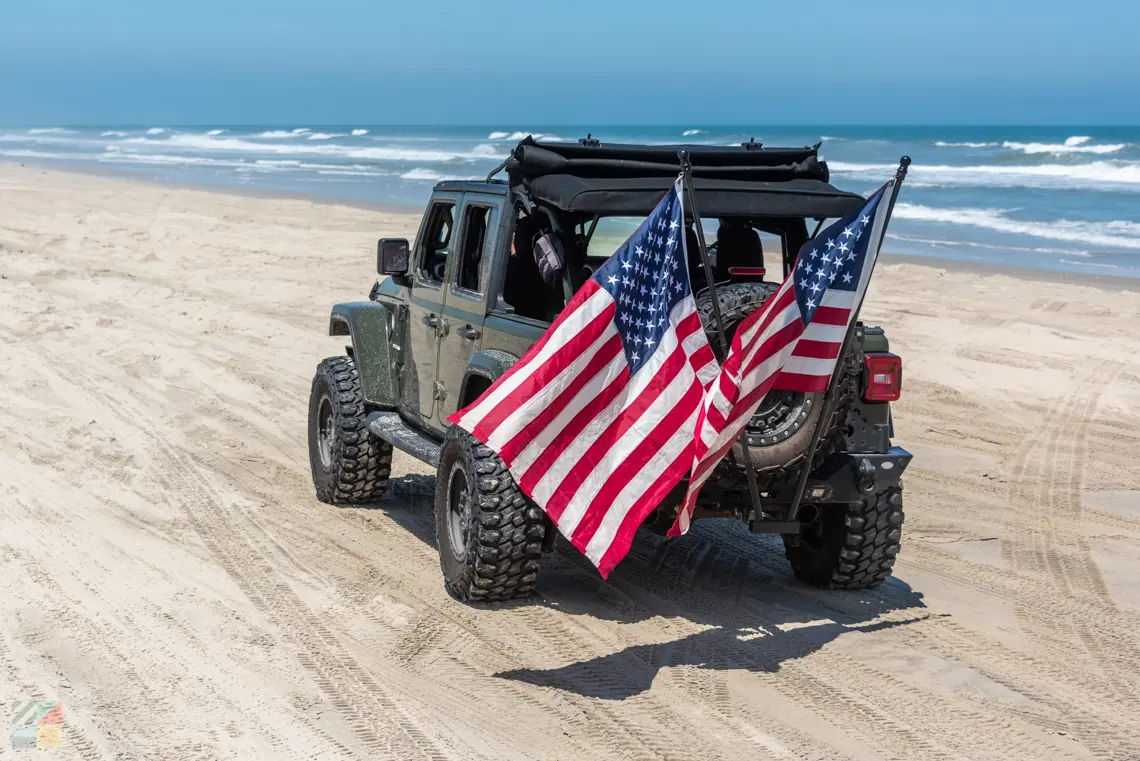
Lower the pressure in all tires to 20-25 psi before you drive onto the sand. This increases the tire's contact patch, allowing the vehicle to float on top of the sand rather than digging in. Use a reliable gauge to check pressure. Remember to reinflate the tires to the standard manufacturer recommendation before returning to hard pavement.
-
Tire pressure gauge
-
Air compressor
-
Tire pressure sticker

Engage four-wheel drive (4WD) or all-wheel drive (AWD) if your vehicle has it. This distributes power to all wheels, improving traction. Drive in a low gear, such as second or third, to maintain steady momentum without spinning the wheels. Avoid sudden acceleration or hard braking. Smooth inputs help keep the vehicle stable on the loose surface.
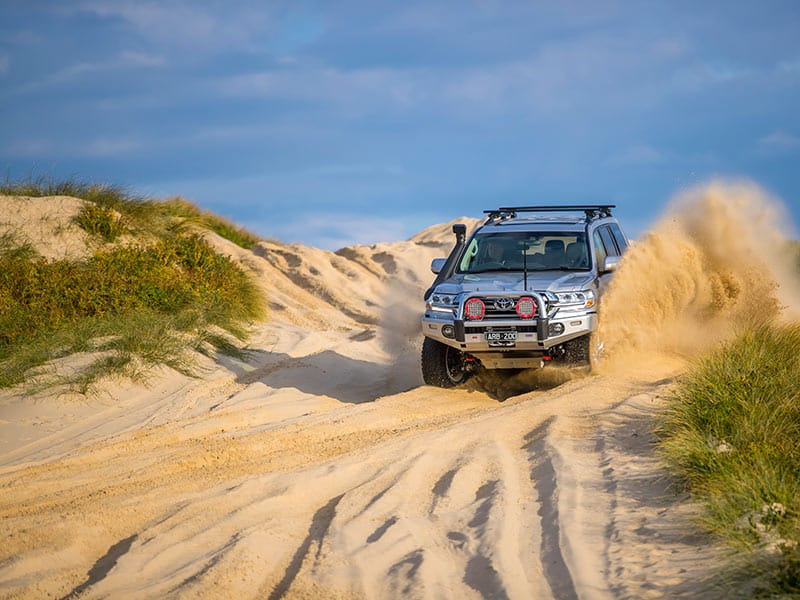
Look for the hard pack, which is the compacted sand near the water line or where other vehicles have driven. This layer is firmer and provides better support for your tires. Avoid driving on the soft, dry sand further up the beach unless necessary. If you must cross soft sand, do so slowly and with momentum.
| Surface | Condition | Recommendation |
|---|---|---|
| Hard Pack | Compacted, near water | Ideal for driving |
| Soft Dry Sand | Loose, upper beach | Avoid or cross slowly |
| Wet Sand | Soggy, near tide line | Good traction, watch for tide |
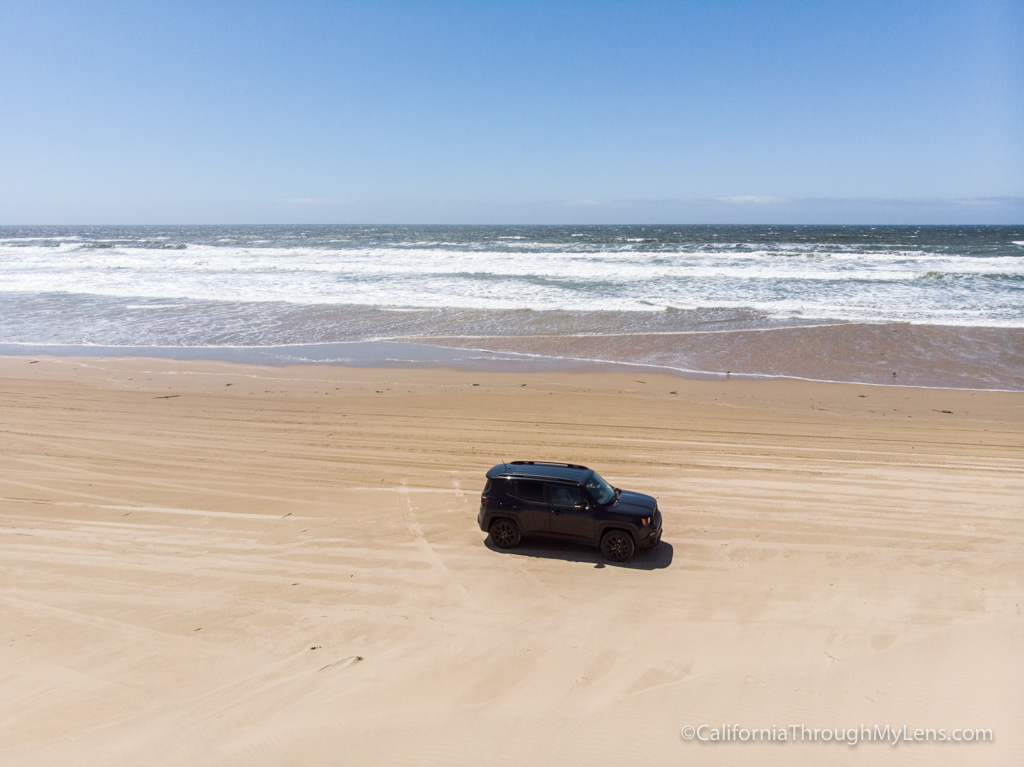
Scan the beach ahead for obstacles like rocks, driftwood, or deep ruts. Wet sand can hide holes or debris. Be aware of tide times to avoid getting trapped by rising water. Drive parallel to the shoreline to stay on firm ground. If you see other beachgoers, slow down and give them plenty of space.
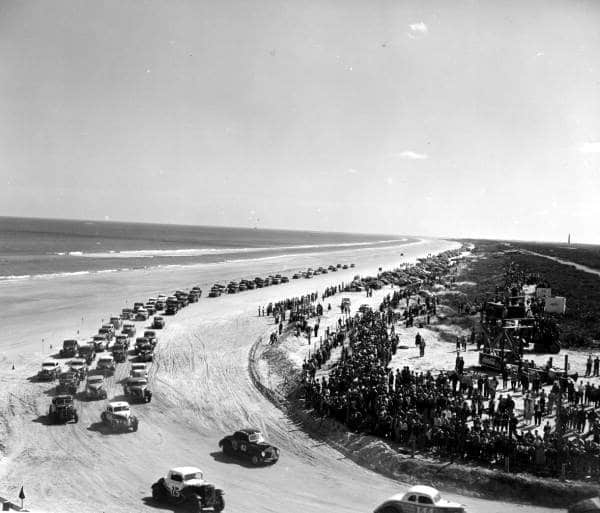
If your vehicle gets stuck, stop spinning the wheels immediately. This only digs you in deeper. Try rocking the vehicle by shifting between drive and reverse gently. If that fails, use traction aids like sand ladders or boards under the drive wheels. If you cannot free the vehicle, call for professional recovery assistance. Do not attempt to dig out the vehicle alone if the sand is too deep.
Fix common beach driving mistakes
Most beach driving incidents happen because drivers treat sand like pavement. The surface behaves differently, requiring specific adjustments to vehicle setup and driving style. Avoiding these errors keeps your vehicle stable and prevents getting stuck.
Running low on tire pressure
Driving on sand with standard tire pressure is the fastest way to sink. Hard tires cut into the surface instead of floating on top. This creates deep ruts and increases drag, making it nearly impossible to maintain momentum.
Lower your tire pressure before entering the sand. For most vehicles, 20 to 25 psi provides the right balance of traction and control. Check your pressure again after driving for a while, as tires warm up and pressure rises slightly. Remember to reinflate before hitting hard-packed sand or roads.
Maintaining consistent momentum
Sudden acceleration or braking breaks traction on loose surfaces. Hitting the gas too hard spins your wheels, digging you deeper into the soft sand. Braking hard causes the tires to lock or slide, reducing steering control.
Keep a steady pace to glide over the sand rather than plowing through it. If you feel resistance, ease off the gas slightly and let the vehicle coast. Avoid stopping on steep inclines; pick your line and keep moving.
Ignoring the tide schedule
Beach driving is only safe when the tide is out and receding. Driving on wet sand near the water line is risky because the sand can turn to quicksand as the tide comes in. Many drivers underestimate how quickly the water approaches.
Check local tide charts before you go. Plan your drive for the hours following low tide, when the sand is firmest and driest. Stay well above the high-tide line. If you hear the water or see it getting closer, leave immediately. Do not wait until you are surrounded.
Beach driving: what to check next
Before you head out to the shoreline, it helps to clear up the practical hurdles that trip up most first-time drivers. Sand driving is less about horsepower and more about physics and preparation. Getting these details right prevents towing bills and keeps the experience fun.
No comments yet. Be the first to share your thoughts!