

The reality of EVs on sand
Taking an EV onto the sand is becoming common as more people trade their gas SUVs for electric ones. It isn't impossible, but the heavy battery packs and instant torque change how you handle a dune compared to a traditional 4x4.
The biggest hurdles come down to weight distribution, traction control, and heat management. EVs, due to the placement of their heavy battery packs, often have different weight biases than internal combustion engine vehicles. This impacts how they interact with the shifting sands. Traction control systems, designed for paved roads, can struggle to find grip on loose surfaces. And while EVs don’t generate exhaust heat, the powertrain can still heat up under stress, which is a concern when airflow is restricted by sand.
I believe we’ll see a steady increase in EVs attempting beach runs, especially with models designed for off-road capability like the NOSMOKE electric beach buggy highlighted on YouTube. However, this growing trend necessitates informed guidance. Beach driving, regardless of the vehicle, demands respect for the environment and a solid understanding of the risks. EVs simply add a new layer of complexity that drivers need to be aware of.
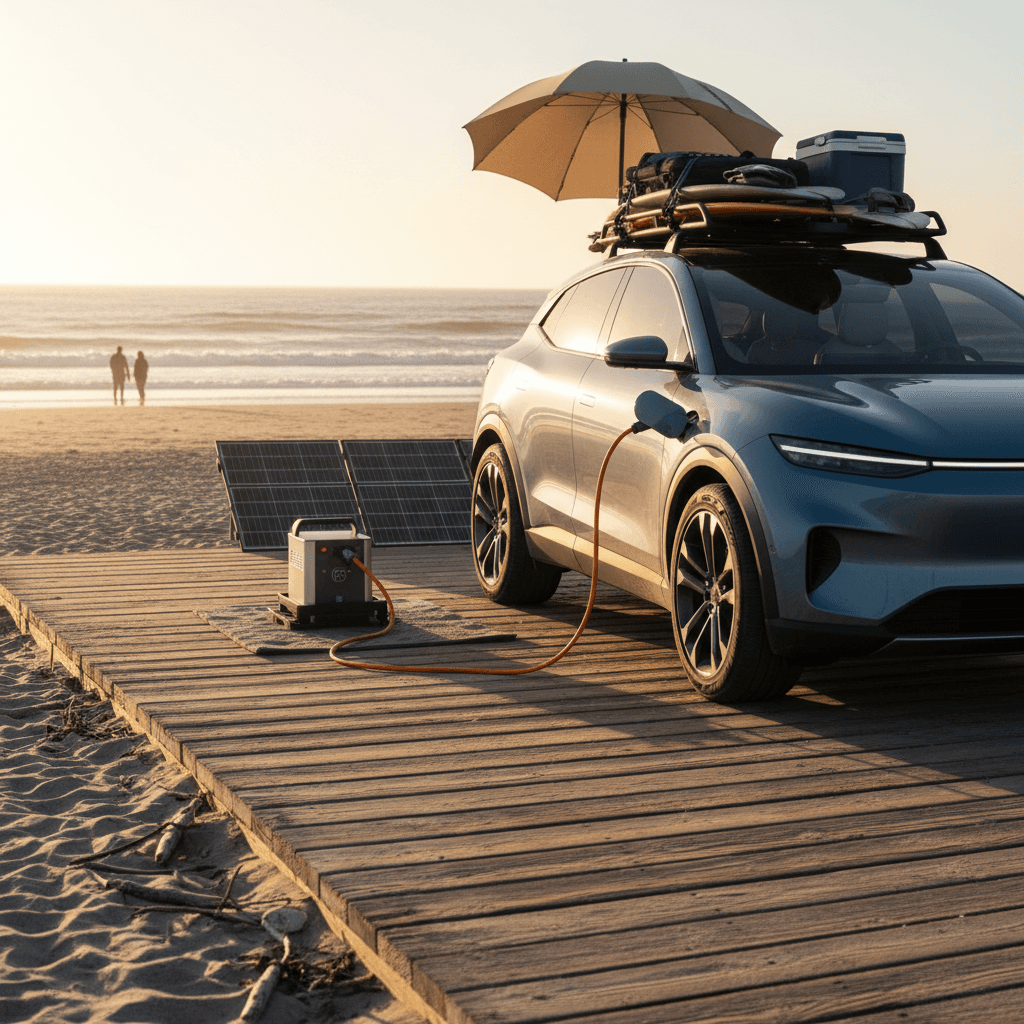
Weight and ground pressure
The weight of an EV is a significant factor when driving on sand. Unlike gasoline cars, the bulk of an EV’s weight comes from the battery pack, usually located low in the chassis. This can lower the center of gravity, which helps with stability, but it also concentrates weight. This higher ground pressure means an EV is more likely to sink into the sand compared to a lighter vehicle.
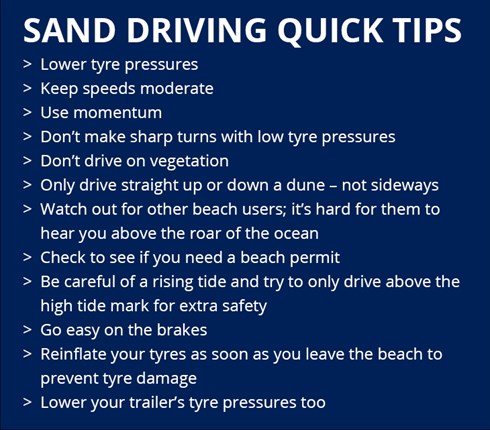
A heavy car on loose sand creates deep ruts and high resistance. You have to drop your tire pressure to widen the contact patch and stay on top of the surface. If you go too low, you risk popping a bead or damaging the sidewall, but staying at street pressure is a guaranteed way to get stuck.
Weight distribution also plays a huge role. A rear-wheel drive EV will behave differently than an all-wheel drive model. A lighter EV crossover, like a Kia Niro EV, will generally fare better than a heavier EV truck, like a Rivian R1T, because it has less weight to sink into the sand. Understanding your vehicle’s weight and weight distribution is the first step towards successful beach driving.
- Check your vehicle's weight: Know the curb weight and weight distribution.
- Drop tire pressure by 10-15 PSI before hitting the soft stuff.
- Consider AWD/4WD: All-wheel drive or four-wheel drive significantly improves traction.
Tire Choices for Electric Beach Bugs
Tires are arguably the most important factor when it comes to beach driving with an EV. All-terrain tires are a good starting point, offering a balance of on-road comfort and off-road grip. Look for tires with aggressive tread patterns designed to dig into loose surfaces. The more voids between the tread blocks, the better the tire will be at self-cleaning – ejecting sand and maintaining traction.
Deflating tires is a common practice, but it requires caution with EVs. Lowering the pressure increases the contact patch, as we discussed, but going too low can damage the tire or even cause it to de-bead, especially with the added weight of an EV. I’d recommend starting with a reduction of 5-10 PSI and carefully monitoring the tire’s sidewalls. A portable air compressor is essential for reinflating tires before returning to paved roads.
Don’t underestimate the risk of tire damage from debris. Beaches are often littered with sharp objects like shells, glass, and driftwood. A puncture can quickly ruin a beach day, and roadside assistance may not be readily available. I’ve seen plenty of flats caused by seemingly harmless debris. Choosing a tire with reinforced sidewalls can help mitigate this risk, but it’s still important to drive cautiously.
Permits and local laws
Beach driving isn’t a free-for-all. Regulations vary widely depending on location and are becoming increasingly strict due to environmental concerns. In New York State, for example, the Clean Pass Program (dot.ny.gov) requires permits for driving on designated beaches within state parks. This program aims to protect fragile dune ecosystems and ensure responsible beach access.
Generally, you can expect rules regarding designated access points – specific ramps or areas where driving on the beach is permitted. Speed limits are typically low, often around 25 mph or less, to minimize disturbance to wildlife and other beachgoers. Vehicle restrictions may also apply, limiting access to 4x4 vehicles or prohibiting certain types of vehicles altogether. Always check local regulations before you go.
I anticipate that environmental regulations will continue to tighten in the coming years. We’re already seeing increased restrictions on beach access in many areas, and this trend is likely to continue. It’s crucial to stay informed about local rules and to respect the environment. Coast Buddy (coastbuddy.com) is a good resource for finding information on beach driving regulations in various locations, but always verify with the local authorities before heading out.
- Check the specific beach rules; for example, New York's Clean Pass Program requires a pre-purchased permit.
- Obtain necessary permits: Some beaches require permits, especially for vehicles.
- Respect designated access points: Only drive on designated areas of the beach.
- Observe speed limits: Drive slowly and cautiously.
Beach Access Permit Difficulty - State by State (2026 Assessment)
| State | Permit Cost | Application Difficulty | Vehicle Requirements | Environmental Review |
|---|---|---|---|---|
| Florida | Moderate | Moderate | Standard 4x4 often required | Generally Required |
| California | Higher | High | Specific vehicle restrictions common, potential for emissions testing | Often Extensive |
| New York | Lower | Low to Moderate | Clean Pass program may apply, focus on vehicle cleanliness | Standard Review |
| North Carolina | Moderate | Moderate | Permit often tied to specific access points, 4x4 recommended | Moderate Review |
| Texas | Generally Low | Low | Few restrictions in many areas, but local ordinances vary | Limited |
| Oregon | Moderate | Moderate | State Parks permits often needed, seasonal restrictions common | Standard Review |
| Maine | Low | Low | Local town permits often sufficient, fewer statewide regulations | Minimal |
Qualitative comparison based on the article research brief. Confirm current product details in the official docs before making implementation choices.
EV-Specific Recovery Techniques
Getting stuck is a real possibility when driving on sand, and recovering a stuck EV presents unique challenges. Traditional winching techniques still apply, but the added weight of the battery pack needs to be considered. You’ll need a winch with sufficient capacity to pull the EV out of the sand, and you’ll need to attach the winch cable to a solid anchor point.
Using appropriate recovery gear is essential. A recovery strap is preferable to a tow rope, as it has some stretch and can absorb shock. Avoid using the EV’s undercarriage as an anchor point, as this could damage the battery pack or other sensitive components. Look for designated recovery points on the vehicle’s frame.
I’ve heard stories of people damaging the battery pack during recovery attempts. This can be a costly mistake, so it’s important to proceed with caution. If you’re not comfortable performing a self-recovery, it’s best to call for professional assistance. A tow truck with off-road capabilities is often the safest option.
- Use a recovery strap: Provides some stretch to absorb shock.
- Find a solid anchor point: Avoid using the EV's undercarriage.
- Consider professional assistance: If you're unsure, call a tow truck.
Battery Health and Saltwater
Saltwater is an EV’s worst enemy. It’s highly corrosive and can cause significant damage to the battery pack and other electrical components. Even a small amount of saltwater intrusion can lead to corrosion and reduced battery performance. Driving through standing saltwater should be avoided at all costs.
Preventative measures are key. After driving on the beach, thoroughly rinse the undercarriage of the EV with fresh water to remove any salt residue. Pay particular attention to the battery pack and electrical connections. Protect the charging port from saltwater exposure. I recommend using a waterproof cover or sealant.
Check the battery casing and suspension for white, crusty salt deposits after your trip. If you see corrosion starting, get it cleaned off immediately before it eats through the seals.
Range Anxiety and Beach Driving
Beach driving can significantly impact an EV’s range. The increased rolling resistance of sand, the use of 4WD or AWD, and the potential for getting stuck all contribute to increased energy consumption. Expect to see a noticeable reduction in range compared to driving on paved roads. It’s easy to become anxious about running out of charge, especially if you're far from a charging station.
To maximize range, drive conservatively. Avoid rapid acceleration and braking. Minimize the use of accessories like air conditioning and the stereo. If your EV has a regenerative braking system, use it to your advantage to recapture energy. I’ve found that driving in Eco mode can also help extend range.
Knowing your vehicle’s range and having a backup plan is essential. Before heading to the beach, fully charge your EV and plan your route accordingly. Identify nearby charging stations and factor in extra time for charging. It’s always better to err on the side of caution and have a contingency plan in place.

No comments yet. Be the first to share your thoughts!