

The Shifting Sands: Understanding Post-Hurricane Beach Changes
Hurricane season 2026 was a stark reminder of the power of nature, and the coastlines we enjoyed just last year are likely very different now. It’s easy to assume a beach you’ve driven on before will be similar, but that’s a dangerous assumption. Hurricanes reshape the coast. You'll find new inlets where there used to be dunes, and sandbars move hundreds of feet from where they sat last summer.
The scale of these changes can be immense. We’re not talking about a few extra ripples in the sand; we’re talking about entire sections of coastline being reshaped. This means familiar routes may be impassable, previously safe areas could be riddled with hazards, and the very topography of the beach could be unrecognizable. Ignoring these changes is a recipe for getting stuck, damaging your vehicle, or worse.
What really concerns me is the hidden nature of these hazards. A seemingly flat stretch of sand might conceal a deep washout, or a sandbar might have migrated, creating a treacherous drop-off. Debris, both large and small, can be buried just beneath the surface, posing a threat to tires and undercarriages. The ocean doesn’t rebuild a beach to be easier to drive on, it rebuilds it according to physics, and that often means more challenges for us.
Understanding that the beach is a dynamic environment, especially after a major storm, is the first step towards safe driving. Don’t rely on past experience. Treat every trip as if you’re exploring a new beach. Be prepared to adjust your plans, turn back if necessary, and always prioritize safety over reaching your destination.
Pre-Trip Reconnaissance: Your New Best Friend
Forget about relying on your memory of what the beach used to look like. Pre-trip reconnaissance is now absolutely essential. Before even thinking about driving on the beach, you need to gather as much information as possible about current conditions. This means checking official sources and, crucially, doing a physical inspection.
The National Park Service (nps.gov) is a great starting point, particularly for beaches within national seashores like Cape Lookout. State Departments of Natural Resources (DNRs) – like Michigan.gov – also often provide updated beach condition reports. These reports may include information about closures, hazards, and recent changes to the coastline. Don’t just look for a "beach is open" status; read the details.
But official reports aren’t always enough. A physical inspection is vital. Walk a significant portion of the area you plan to drive on, looking for new inlets, washover areas, debris, and changes in sand consistency. Pay attention to the high tide line and potential hazards that may be hidden at high water. I personally use a long pole to probe the sand ahead of me, checking for soft spots or buried objects.
Here’s my checklist: updated beach report, tide chart, high-resolution map (digital or paper), probing pole, and a healthy dose of skepticism. Don’t drive onto the beach until you’ve thoroughly assessed the conditions and are confident in your ability to navigate safely.
Tires, Pressure, and Recovery Gear: A Post-Storm Upgrade
Post-hurricane beaches are notorious for softer sand and hidden obstacles, dramatically increasing the risk of getting stuck. This means you might need to upgrade your tire setup and definitely need to be prepared with the right recovery gear. Don’t skimp on quality; your safety depends on it.
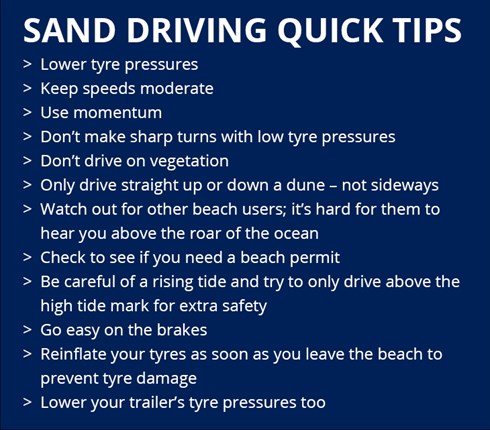
All-terrain tires are a good starting point, but dedicated sand tires offer significantly better traction in very soft conditions. If you plan on frequent beach driving, investing in a set of sand tires is worthwhile. Regardless of your tire choice, proper tire pressure is key. Lowering your tire pressure increases the contact patch, improving traction in sand. A good starting point is around 15-20 psi, but adjust based on the sand consistency and your vehicle’s weight.
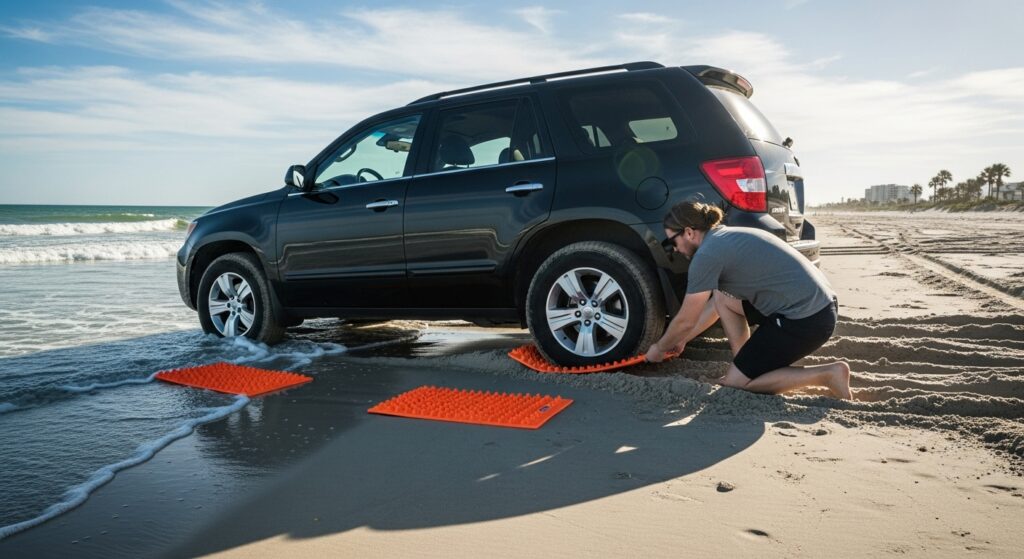
However, reducing tire pressure is only half the battle. You must have the right recovery gear. A high-quality winch is invaluable, but it needs to be paired with a properly sized tow strap and anchor point (like a buried sand anchor). A shovel is essential for digging your tires out, and traction boards provide a solid surface for your tires to grip. Don’t bother with cheap, plastic traction boards; they’ll likely break when you need them most.
I’ve seen too many people rely on flimsy tow straps and inadequate winches. A broken strap or a winch that can’t handle the load can be incredibly dangerous. Invest in reliable, well-maintained gear. It’s not just about getting unstuck; it’s about getting unstuck safely.
- Winch: High-quality, properly rated for your vehicle’s weight.
- Tow Strap: Heavy-duty, designed for recovery.
- Shovel: Sturdy, preferably with a long handle.
- Traction Boards: Durable, designed for sandy conditions.
- Tire Pressure Gauge: Accurate and easy to read.
Beach Recovery Gear Checklist
- Recovery Tracks - These provide traction for your tires when stuck in sand. Brands like MAXTRAX are popular, but more affordable options are available.
- Shovel (Folding) - A sturdy folding shovel is essential for digging your vehicle out or creating a path around obstacles. Consider a model with a D-grip handle for better leverage.
- Tow Strap (Heavy Duty) - A strong tow strap (not a bungee cord!) is crucial for being pulled out by another vehicle. Look for straps with a working load limit exceeding your vehicle’s weight.
- Tire Pressure Gauge - Maintaining proper tire pressure is vital for beach driving. A digital gauge provides accurate readings. Lowering tire pressure increases the contact patch and improves traction.
- Air Compressor (Portable) - After driving on the beach, you’ll need to reinflate your tires. Portable 12V air compressors that plug into your vehicle's cigarette lighter are readily available. Brands like VIAIR are well-regarded.
- Winch (with Synthetic Rope) - For self-recovery, a winch is invaluable. Synthetic rope is safer and lighter than steel cable. Ensure the winch is properly sized for your vehicle.
- Hi-Lift Jack - A Hi-Lift jack can be used for lifting your vehicle to change a tire or assist in recovery, but requires careful and proper training to use safely.
Navigating New Hazards: Inlets, Debris, and Hidden Obstacles
Hurricanes create a whole new set of navigational hazards on beaches. Newly formed inlets and washover areas are particularly dangerous. These can be deceptively deep and fast-flowing, easily trapping a vehicle. Approach them with extreme caution, and if you’re unsure, don’t cross. It’s always better to turn back.
Submerged debris is another significant threat. Hurricanes can wash away sections of roadways, buildings, and other structures, leaving behind a mess of metal, wood, and other hazardous materials. These can be hidden just beneath the surface of the sand, causing serious damage to your vehicle and potentially injuring occupants. Scan the beach ahead for any signs of debris and drive slowly.
Shifting sandbars are also a concern. They can create unexpected drop-offs and uneven terrain, making it difficult to maintain control of your vehicle. I once nearly drove into a hidden ditch created by a shifting sandbar – it was a sobering experience. I’m always scanning ahead, looking for subtle changes in the sand’s texture or color.
Remember, what looked like a clear path yesterday might be obstructed today. Constant vigilance and a slow, deliberate pace are your best defenses against these hidden hazards.
Tides and Currents: A Heightened Risk
Hurricanes can significantly alter tidal patterns and create stronger currents, adding another layer of complexity to beach driving. Understanding tide charts is more important than ever. Check the predicted tide times and heights for the area you’ll be driving on, and be aware that storm surge can leave behind unexpected changes in the seabed.
Rip currents are a particular danger. These powerful currents can quickly pull you and your vehicle out to sea. Learn to recognize the signs of a rip current – a narrow channel of churning water, a break in the wave pattern, or discolored water. If you get caught in a rip current, don’t panic. Steer parallel to the shore until you’re out of the current, then swim towards the beach.
The seabed itself can be drastically altered after a hurricane. Areas that were previously firm and stable may become soft and unstable, while new channels and depressions may form. Be aware of your surroundings and drive cautiously, especially near the water’s edge.
It’s not just about getting stuck; it’s about being swept away. Respect the power of the ocean and always err on the side of caution.
Permits, Regulations, and Local Authority Updates
Post-hurricane, beach access rules often change. Authorities may impose temporary closures, restrict access to certain areas, or require permits for beach driving. Before you head out, check with local authorities – state DNRs, county parks departments, or the National Park Service – to get the latest information.
Speed limits may also be reduced or modified. Pay attention to posted signs. Drive slowly enough to spot a washout before you're in it.the beach and the presence of other people. Ignoring these regulations isn’t just illegal; it’s irresponsible and puts yourself and others at risk.
Regulations are in place for a reason. They're designed to protect both the environment and the public. Don’t assume that rules from previous years still apply. Check for updates every time before you drive. A quick phone call or a visit to the local authority’s website can save you a lot of trouble – and a hefty fine.
There’s something special about being the first to hit the sand at low tide.⛱ 🚙 Remember to drive like you’re on a real road, because road rules still apply. 🚸 Get more beach driving tips: https://t.co/QsZrksjWzg pic.twitter.com/AVYh2leRcq
— StreetSmarts QLD (@StreetSmartsQLD) December 26, 2021
Emergency Preparedness: Beyond the Basics
A standard emergency kit is a good start, but you need to go beyond the basics when driving on a post-hurricane beach. A reliable communication device is essential. Cell phone service can be spotty or nonexistent in remote coastal areas, so consider carrying a satellite phone or a personal locator beacon (PLB).
Pack extra food and water – enough for at least 24 hours. A first-aid kit specifically tailored for beach injuries (sunburn, cuts, scrapes, insect bites) is also important. Don’t forget a flashlight with extra batteries, a whistle for signaling for help, and a blanket for warmth.
Here’s what’s in my kit: satellite phone, PLB, three days of non-perishable food, four liters of water, comprehensive first-aid kit, flashlight, whistle, blanket, multi-tool, duct tape, and a map of the area. I also carry a portable air compressor for re-inflating tires.
Having the right gear is only half the battle. You also need a plan. Let someone know where you’re going and when you expect to be back. Be prepared to self-rescue if necessary, and don’t hesitate to call for help if you get into trouble.
Respect the Coast: Minimizing Your Impact
Even under normal circumstances, beach driving has an environmental impact. After a hurricane, the ecosystem is even more vulnerable. It’s crucial to minimize your impact and drive responsibly. Stay on designated routes whenever possible, and avoid driving on dune systems or in nesting areas.
Be mindful of wildlife. Avoid disturbing birds, sea turtles, or other animals. Pack out all trash, including food wrappers, plastic bottles, and cigarette butts. Leave the beach as good as – or better than – you found it.
Consider the long-term consequences of your actions. Every tire track leaves a mark, and repeated driving in sensitive areas can cause lasting damage. By driving responsibly, you can help protect these fragile ecosystems for future generations.

No comments yet. Be the first to share your thoughts!