

Electric vehicles on sand
There's a definite buzz building. More and more people are looking at electric vehicles not just for commuting, but for adventures – and that increasingly includes driving on the beach. The Tesla Cybertruck is often the first vehicle that comes to mind when people picture this, but it’s hardly the only option anymore. The idea of an EV tackling soft sand used to seem a bit far-fetched, but 2026 is shaping up to be a turning point.
The biggest hurdles are well-known: sand dramatically impacts range, and traction can be a real issue. However, manufacturers are responding. We’re seeing EVs specifically designed with higher ground clearance, robust all-wheel-drive systems, and improved battery protection. The infrastructure is also slowly catching up, with more public charging stations appearing along coastal routes, though gaps remain.
Early adopters have had some anxieties, understandably. Concerns about getting stranded, damaging the battery, or simply being unprepared are valid. That’s why informed preparation is so critical. It's no longer about if you can take an EV on the beach, but how to do it safely and effectively. This isn’t just about having the right vehicle; it’s about understanding the nuances of driving in a challenging environment.
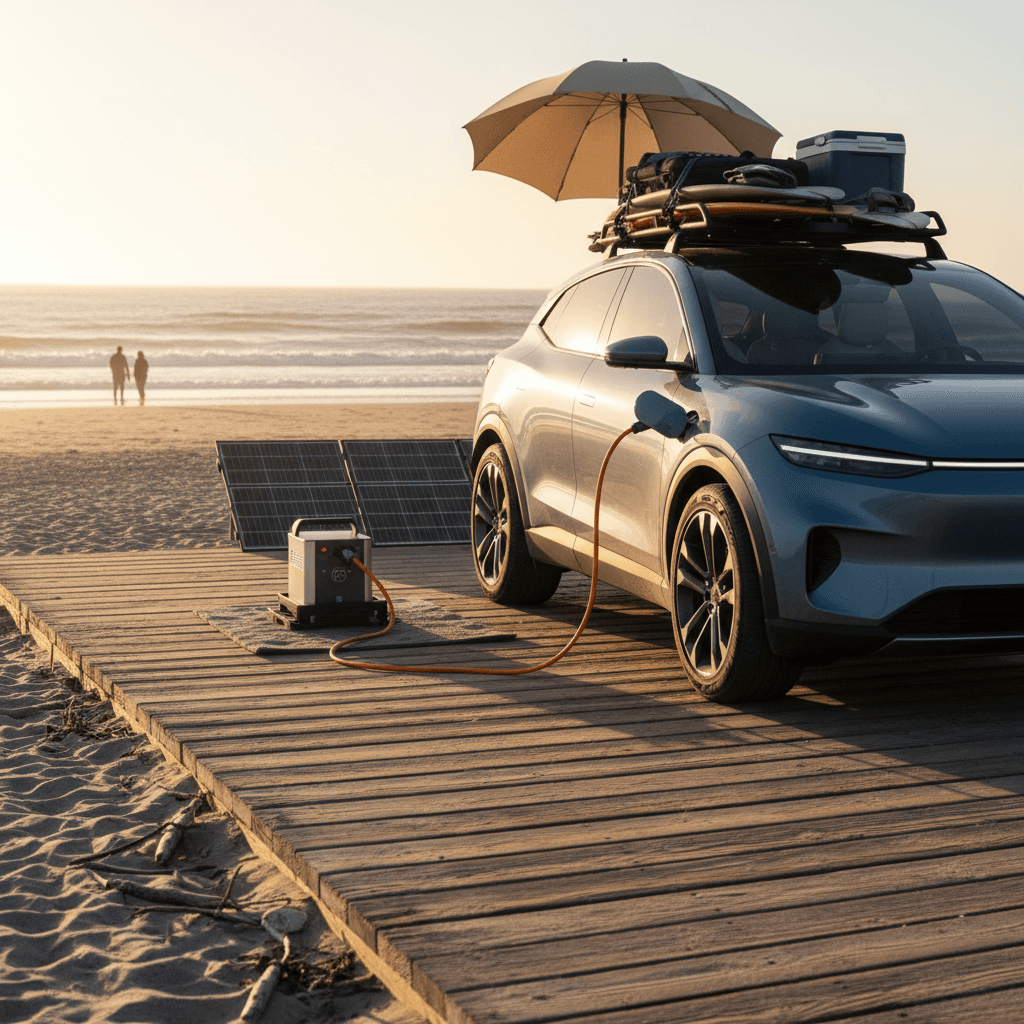
Trucks and SUVs built for the coast
The Tesla Cybertruck is generating a lot of attention, and for good reason. Its 13.1 inches of ground clearance (with the air suspension maxed out) is a significant advantage, as are its dual-motor or tri-motor all-wheel-drive systems. Tesla also emphasizes the battery pack’s robust shielding, designed to protect against impacts. But let’s be clear: it’s not the only game in town.
The Rivian R1T is the one to beat here with 14.5 inches of clearance and four motors that control each wheel independently. The Hummer EV has 11.4 inches, which is plenty, though its massive weight makes it sink faster if you stop in the wrong spot. I've even seen modified Ford Mach-Es out there, but they don't have the height to handle deep ruts.
When comparing specs, ground clearance is paramount – you don’t want to be dragging your undercarriage. Approach and departure angles are also crucial; steeper angles allow you to navigate obstacles without scraping. AWD systems that offer locking differentials or torque vectoring provide superior traction. Underbody protection, ideally with skid plates, is essential to guard against rocks and debris. The Rivian, for example, includes a reinforced underbody shield.
However, limitations exist. The Mach-E, despite modifications, will always be more restricted than a purpose-built off-roader like the Cybertruck or R1T. Battery size also plays a role. Larger batteries provide more range, but also add weight, which can worsen performance in sand. It’s about finding the right balance for your needs and the terrain you plan to tackle.
The basics of sand driving
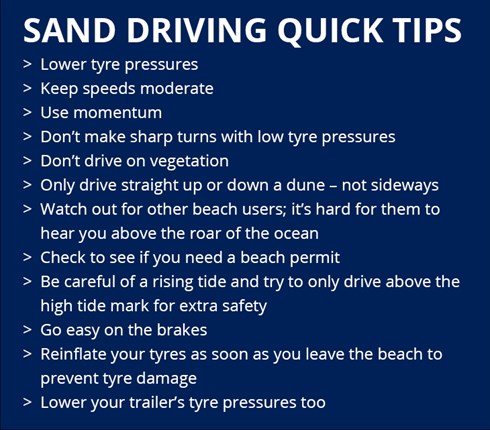
Even with the most capable EV, successful beach driving relies on solid fundamentals. This isn’t just about throwing it in gear and hoping for the best. Tire pressure adjustment is absolutely critical. Deflating your tires significantly – typically to around 15-20 PSI, but check your vehicle’s manual – increases the contact patch and improves traction. Remember to reinflate them before returning to pavement!
Technique matters too. Maintaining momentum is key, but avoid excessive wheel spin. Gentle steering inputs are preferable to jerky movements. If you start to get stuck, slowly back out and try a different line. Recovery gear is a must-have. A shovel, tow strap, and traction boards (like Maxtrax) can be lifesavers. Don’t rely on other beachgoers to pull you out; be prepared to self-recover.
Knowing your vehicle’s limits is paramount. Don’t attempt routes that look too challenging. EVs offer instant torque, which can be an advantage, but also makes it easier to get stuck if you’re not careful. The weight of an EV, particularly one with a large battery, can also be a factor in soft sand. Always assess the conditions before proceeding.
How sand drains your battery
The biggest worry for EV drivers heading to the beach? Reduced range. Sand significantly impacts efficiency. The increased rolling resistance – it's simply harder to push tires through sand – demands more power. Maintaining speed requires constant effort, draining the battery faster than on pavement. Expect a substantial drop in miles per kilowatt-hour.
Realistic range estimates are tough to give, as they depend heavily on the vehicle, tire pressure, speed, and sand conditions. However, a Rivian R1T, which typically gets around 314 miles on a charge, might see that reduced to 150-200 miles in soft sand. A Cybertruck, with its larger battery, might fare slightly better, but still expect a significant reduction. These are just estimates; your mileage will vary.
To save power, keep your speed low. Plowing through sand at 30 mph kills the battery twice as fast as crawling at 12 mph. I usually turn off the air conditioning and roll the windows down if the breeze is moving. Check PlugShare before you leave the pavement, but don't bet your life on a charger being functional just because the app says it is.
Cleaning up after the salt
Salt air and sand are incredibly corrosive, and EVs are not immune. The underbody components – battery pack, suspension, wiring – are particularly vulnerable. Salt accelerates rust and can damage electrical connections. Regular maintenance is crucial to prevent long-term issues.
Here's a post-beach-driving checklist: a thorough wash, paying special attention to the undercarriage. Inspect the battery connections for corrosion. Apply a rust inhibitor to exposed metal surfaces. Protect the charging port from sand and moisture; consider a protective cover. Some manufacturers, like Rivian, recommend specific cleaning procedures for their vehicles after coastal driving.
Pay close attention to the battery’s thermal management system. Sand can clog cooling vents, reducing its efficiency. Regularly check and clean these vents. It's also a good idea to have a qualified EV technician inspect your vehicle annually, especially if you frequently drive on the beach.
Permits and local rules
Beach driving regulations vary dramatically depending on location. What’s allowed in North Carolina might be completely prohibited in California. Permits are often required, and even when permits are available, access may be restricted to certain areas or times of year. Seasonal closures are common to protect nesting sea turtles or shorebirds.
Coast Buddy is an excellent resource for finding local beach driving rules. State park websites and local tourism boards are also good sources of information. Always check before you go. Driving on restricted beaches can result in hefty fines and even vehicle impoundment. Respecting the rules isn’t just about avoiding penalties; it’s about protecting the environment.
Leave No Trace principles are essential. Pack out everything you pack in. Avoid disturbing wildlife. Stay on designated routes. Be mindful of other beachgoers. Remember, access to beaches is a privilege, not a right. Responsible behavior ensures that future generations can enjoy this unique experience.
New tech on the horizon
The future of EV beach driving looks promising. Tire technology is evolving, with companies exploring sand-specific tires designed to maximize traction and minimize rolling resistance. Improved battery technology, offering greater energy density and faster charging times, will alleviate range anxiety.
Advancements in vehicle suspension systems, such as adaptive dampers and air suspension, will enhance off-road capability and ride comfort. The potential for autonomous driving features to aid in sand navigation is also intriguing, though still several years away. Imagine a system that automatically adjusts tire pressure and optimizes torque distribution based on sand conditions.
However, it’s important to remain grounded. These technologies are still under development, and their widespread adoption will take time. But the trend is clear: EVs are becoming increasingly capable of handling the challenges of beach driving, and the supporting infrastructure is slowly but surely improving.

No comments yet. Be the first to share your thoughts!