

Electric vehicles on the sand
More electric vehicles are showing up on beaches. While the instant torque helps in soft sand, the heavy weight and low-hanging battery packs mean you can't drive them exactly like a gas truck. You have to account for how that weight settles and how the traction control reacts to slip.
Unlike internal combustion engines, EVs don’t have a hot exhaust system to worry about cooking the sand, but they do have a large battery pack underneath. That pack is sensitive to temperature extremes, and sand driving can push it to its limits. We need to consider how the environment impacts the battery and how to mitigate potential risks. It's a learning curve for everyone involved, from manufacturers to drivers.
Even now, there are vehicles being designed specifically for this purpose. The NOSMOKE, an all-electric beach buggy, caught my attention recently. It demonstrates a growing market for EVs built to thrive in coastal environments. But for those wanting to use existing EVs, preparation and understanding are key. This guide will cover everything you need to know to enjoy safe and responsible electric vehicle beach driving in 2026.
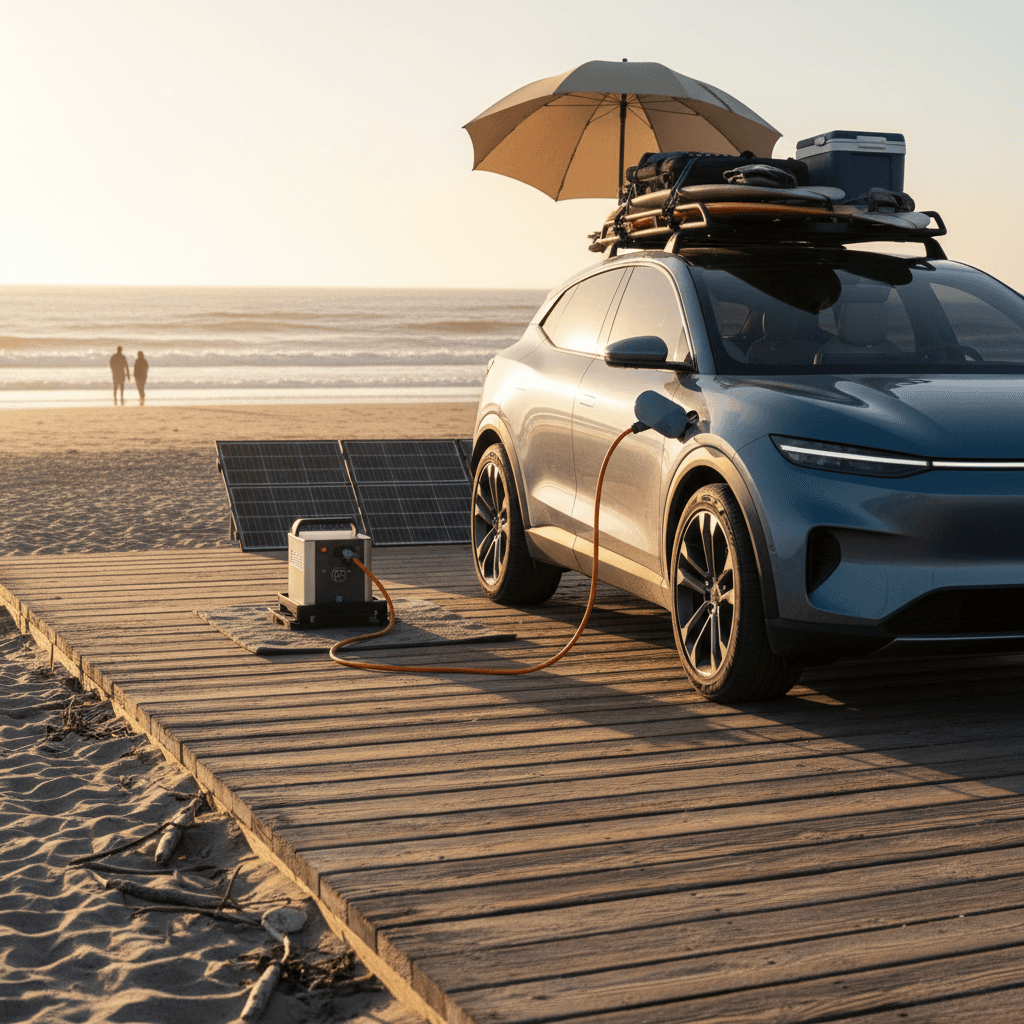
Electric models that handle sand
Not every electric vehicle is created equal when it comes to beach driving. Ground clearance is paramount, as is the availability of four-wheel drive or all-wheel drive with a locking differential. You're looking for models that can handle uneven terrain and provide sufficient traction in soft sand. The ideal scenario? A vehicle designed with some undercarriage protection.
The Rivian R1S is a strong contender. Its adjustable air suspension allows for significant ground clearance, and its quad-motor system provides excellent traction. The Tesla Model X also gets mentioned frequently, but owners should be aware of the need for aftermarket skid plates to protect the battery pack and other components from potential damage. Without those, you’re risking expensive repairs.
The Ford Mach-E, particularly the all-wheel drive versions, can manage some beach conditions, but again, undercarriage protection is highly recommended. It doesn't have the ground clearance of the Rivian, so it’s better suited for hard-packed sand. As we look ahead to 2026, we expect to see more EVs specifically engineered for off-road use, potentially from brands like Polestar and even Hyundai.
Don't underestimate the power of modifications. Lift kits can significantly increase ground clearance, while skid plates provide crucial protection for the battery and drivetrain. These modifications can transform a marginally capable EV into a surprisingly adept beach driver. However, remember that modifications may void your warranty, so weigh the risks and benefits carefully.
Be realistic about what your car can do. A low-slung sedan or a front-wheel-drive crossover will get stuck almost immediately. If you don't have at least 8 inches of clearance and a dedicated sand or off-road mode, stay on the hard-pack.
- Rivian R1S: The air suspension can lift the body high enough to clear deep ruts.
- Tesla Model X: You'll need an aftermarket skid plate because the battery sits low and exposed.
- Ford Mach-E (AWD): Suitable for hard-packed sand, skid plates recommended.
- NOSMOKE: Purpose-built electric beach buggy.
Essential Undercarriage Protection for Your EV on the Beach

Constructed from durable 6061-T6 aluminum for robust protection. · Provides full chassis glide guard for comprehensive underbody defense. · Designed for specific Yamaha Raptor models, ensuring a precise fit.
This skid plate offers essential undercarriage protection against impacts and debris, crucial for off-road adventures.

Three-piece matte screen protector set for Rivian R1S & R1T. · Anti-fingerprint coating helps maintain a clear display. · 9H hardness provides scratch and impact resistance for navigation touch displays.
Protects your vehicle's sensitive navigation and touch displays from scratches and smudges, maintaining clarity during drives.

Aluminum front skid plate designed for Tesla Model 3 and Model Y. · Offers under-engine guard cover for chassis protection. · Specifically fits Tesla Model 3 (2017-2025) and Model Y (2020-2025).
This guard plate shields the undercarriage of your Tesla from potential damage caused by road debris or uneven terrain.

Black plastic license plate frame. · Features UV-printed Mustang Mach-E logo. · Designed to fit standard license plates.
A simple accessory to personalize your Mustang Mach-E while adhering to license plate regulations.

Rear skid plate designed for the Hyundai Ioniq 5. · Provides protection for the rear undercarriage. · Compatible with Hyundai Ioniq 5 models from 2022-2024.
This rear skid plate adds an extra layer of defense to the underside of your Ioniq 5, safeguarding vital components.
As an Amazon Associate I earn from qualifying purchases. Prices may vary.
Heat and battery health
This is where things get serious. Sand and batteries don’t always play well together. The primary concern is temperature. Sand can act as an insulator, trapping heat around the battery pack, especially on hot days. Conversely, cold sand and air temperatures can rapidly drain the battery. Both extremes can significantly impact battery life and performance.
Extreme temperatures accelerate battery degradation. Repeated exposure to high heat can reduce the battery's capacity over time, meaning you’ll get less range. Cold temperatures can temporarily reduce power output and charging speed. Managing battery temperature is therefore crucial for responsible EV beach driving.
Pre-conditioning the battery before heading to the beach is a good starting point. This warms or cools the battery to an optimal temperature, improving efficiency and performance. Limit high-performance driving, such as rapid acceleration and deceleration, as this generates heat. Park in the shade whenever possible to minimize direct sunlight exposure. And avoid fully discharging the battery, as this can stress the cells.
Regenerative braking, while efficient in normal driving, can generate additional heat in the battery when used extensively on sand. Consider reducing the level of regenerative braking or using it more conservatively. It's a trade-off between efficiency and battery health.
The importance of tire pressure
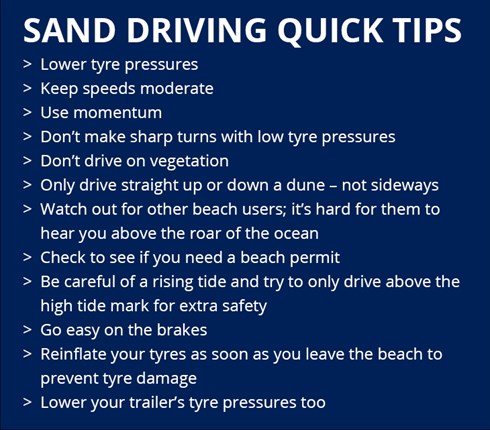
Forget everything you know about optimal tire pressure on pavement. When driving on sand, lower tire pressure is your friend. Deflating your tires increases the contact patch – the area of the tire that touches the sand – providing more surface area for traction. This prevents you from sinking and makes driving significantly easier.
The ideal pressure depends on the sand condition and your vehicle's weight. For soft, loose sand, you might go as low as 15-20 PSI. For hard-packed sand, 25-30 PSI might be sufficient. Experiment to find what works best for your vehicle and the specific beach conditions. Be cautious, though; going too low can lead to tire de-beading – where the tire separates from the rim – a potentially dangerous situation.
Always carry a portable air compressor and a reliable tire pressure gauge. You’ll need to re-inflate your tires before returning to pavement. Driving on deflated tires at highway speeds is unsafe and can damage the tires. A word of warning: beadlock wheels are a worthwhile investment for serious sand drivers, as they physically lock the tire to the rim, preventing de-beading, but they are an expensive upgrade.
Recovery gear for getting unstuck
Even with careful planning and proper tire pressure, getting stuck is a real possibility. Sand can be unforgiving. That’s why carrying the right recovery gear is essential. A tow strap, D-rings, a shovel, and traction boards (like Maxtrax) are the minimum requirements.
Tow straps should be rated for at least your vehicle's weight. D-rings provide secure attachment points for the strap. A shovel is useful for digging around stuck tires. Traction boards provide a solid surface for the tires to grip onto. Learn how to use these tools before you get stuck.
Know your vehicle's recovery points – these are reinforced areas designed to withstand the force of a tow. Avoid attaching a tow strap to suspension components or bumpers, as they can easily be damaged. If you're attempting a self-recovery, proceed slowly and cautiously. Traveling with a buddy is always a good idea; they can provide assistance if needed. And never use a winch improperly – it can be incredibly dangerous.
Essential Traction Boards for Your EV Beach Adventure

Durable construction for mud, snow, sand, and scree · Integrated jack base for stable lifting · Includes 2 straps and a storage bag for portability
These traction boards are crucial for ensuring your electric vehicle can regain traction on soft sand, preventing getting stuck and enabling a safe return from the beach.

Heavy-duty design for challenging off-road conditions · Suitable for mud, sand, and snow · Features a jack base for added utility
These traction boards are crucial for ensuring your electric vehicle can regain traction on soft sand, preventing getting stuck and enabling a safe return from the beach.

All-weather, foldable design for easy storage · Provides anti-skid grip to self-rescue · Effective in snow, ice, mud, and sand
These traction boards are crucial for ensuring your electric vehicle can regain traction on soft sand, preventing getting stuck and enabling a safe return from the beach.

Designed for emergency tire recovery in various terrains · Includes a jack lift base · Made from Global Recycled Standard materials
These traction boards are crucial for ensuring your electric vehicle can regain traction on soft sand, preventing getting stuck and enabling a safe return from the beach.

High-performance vehicle recovery boards · Engineered for reliable traction in challenging conditions · Durable construction for repeated use
These traction boards are crucial for ensuring your electric vehicle can regain traction on soft sand, preventing getting stuck and enabling a safe return from the beach.
As an Amazon Associate I earn from qualifying purchases. Prices may vary.
Local regulations and access
Beach driving regulations are incredibly varied. What's permitted on one beach might be strictly prohibited on another. Permits are often required, and some beaches have restricted areas, speed limits, and seasonal closures. It’s your responsibility to know and abide by the rules.
Coast Buddy is an excellent resource for finding beach access information and understanding local regulations. Their website provides detailed maps, permit information, and updates on beach conditions. Always check the regulations before you go, and be prepared to adjust your plans if necessary.
Responsible beach driving also means respecting the environment. Stay on designated routes, avoid disturbing wildlife, and pack out all your trash. Let's keep these beautiful coastal areas pristine for future generations. Following these guidelines will help ensure that EVs continue to have access to these unique driving experiences.

No comments yet. Be the first to share your thoughts!