


Check local beach driving rules first
Before you inflate your tires or head for the sand, verify that the beach you plan to drive on actually allows it. Not all coastlines are open to vehicles, and even those that are often have strict seasonal windows or require specific permits. Driving on a restricted beach can result in heavy fines, towing, or being banned from the area entirely.
Access varies wildly by location. In North Carolina’s Outer Banks, beach driving is permitted year-round on Hatteras Island, but in nearby Nags Head and Kill Devil Hills, it is only allowed from October 1 through April 30 Outer Banks Tourism. In California, Oceano Dunes is the only state park where vehicles are allowed on the beach, and even there, passenger cars are restricted to the northern portion Pismo Sands Beach Club.
Always check the current regulations with the local parks department or tourism board before you go. Rules can change due to wildlife nesting seasons or erosion concerns. If you are unsure, assume the beach is closed to vehicles until you have confirmed otherwise.
Lower tire pressure for better traction
Airing down your tires is the single most important adjustment for off-road beach driving. It transforms your vehicle from a digging machine into a floating platform. When tires are inflated to standard road pressure, the contact patch with the sand is tiny. The weight of the vehicle concentrates on a small area, causing the tires to cut through the hard-packed surface and sink into the soft sand below. By releasing air, you increase the footprint, distributing the vehicle's weight over a larger surface area. This allows the tires to "float" on top of the sand rather than plowing through it.
The Target Pressure Range
For most standard SUVs and trucks, the ideal tire pressure for beach driving falls between 15 and 17 psi. This range provides the optimal balance between flotation and sidewall support. Going lower than 15 psi increases the risk of bead unseating, where the tire loses its seal against the rim, especially if you hit a hard patch or a wave trough. Going higher than 17 psi reduces the contact patch too much, diminishing traction and increasing the likelihood of getting stuck. Always check your specific tire sidewall for maximum load ratings, but 15-17 psi is the safe starting point for most off-road beach driving scenarios.
How to Air Down Safely
- Park on firm ground: Find a stable, flat area away from the tide line to adjust your tires.
- Release air gradually: Use a tire pressure gauge to monitor the pressure as you release air. Do not guess.
- Check all four tires: Ensure all tires are at the same pressure to maintain vehicle stability and handling.
- Drive slowly: Once aired down, drive at a steady, moderate speed. Avoid sudden acceleration or braking, which can cause the tires to dig in despite the lower pressure.
Remember, you must reinflate your tires before returning to paved roads. Driving on highway speeds with 15 psi tires is dangerous and can lead to tire failure. Carry a reliable air compressor with you to restore proper pressure after your beach adventure.
Select the right gear for beach recovery
Getting stuck in soft sand is the most common setback when driving on the beach. Being prepared with the right recovery tools separates a quick restart from a stranded situation. This section lists the essential equipment you should pack to handle common beach driving issues.
Essential Recovery Gear
A well-stocked recovery kit is your safety net. You do not need expensive, heavy-duty winches for typical beach driving, but you do need specific items to get moving again. The following gear covers the most frequent scenarios, from minor bogging to getting stuck deep in wet sand.


As an Amazon Associate, we may earn from qualifying purchases.
Sand Lugs (Traction Boards): These are the most critical items for beach recovery. When your tires spin in soft sand, sand lugs provide the necessary grip to get traction. Slide them under the drive wheels when you are stuck, then drive slowly and steadily. They are lightweight and fit easily in any vehicle.
Portable Air Compressor: Proper tire pressure is the first line of defense against getting stuck. Lowering your tire pressure increases the footprint and improves traction on sand. A portable compressor allows you to quickly reinflate your tires to highway pressure once you leave the beach, ensuring safe driving on pavement.
Recovery Shovel: A sturdy shovel is indispensable for digging out sand from around your tires and under the vehicle's chassis. Look for a lightweight, rust-proof aluminum shovel that folds for storage. It helps clear the path so your tires can find solid ground.
Tow Strap: A heavy-duty nylon tow strap is essential if you need assistance from another vehicle. Unlike bungee cords, a nylon strap stretches slightly, creating a pulling motion that can help free a stuck vehicle. Ensure it has a high weight rating suitable for your vehicle's mass.
Work Gloves: Recovery work can be dirty and abrasive. A pair of durable work gloves protects your hands from hot tires, sharp rocks, and rough straps. They also provide a better grip when handling equipment in wet or sandy conditions.
Maintain momentum to avoid getting stuck
Driving on sand is less about brute force and more about physics. The loose surface acts like a fluid; if you slow down too much, your tires sink and lose traction. The goal is to keep a steady, moderate speed that allows the vehicle to "float" on top of the grains rather than digging into them.
Keep a steady throttle
Once you have selected your gear and released the air, find a rhythm. Apply gentle, consistent pressure to the accelerator. Avoid sudden bursts of power, which can cause the wheels to spin and dig a hole. Think of it like riding a bicycle: you need forward speed to stay upright. If you feel the vehicle slowing, ease off slightly to let the momentum carry you, then apply throttle again smoothly.
Smooth steering inputs
Sand is unpredictable. Sharp turns or sudden steering corrections can upset the vehicle's balance, causing it to slide or get high-centered. Make all steering adjustments gradually. If you need to turn, do it early and wide. Keep your hands relaxed on the wheel to feel the feedback from the tires. Over-correcting is a common mistake that leads to getting stuck.
Watch your speed
There is a fine line between momentum and loss of control. Driving too fast reduces your ability to react to ruts or changes in the sand texture. Aim for a speed that feels comfortable and controlled, typically between 10-20 mph depending on conditions. If you encounter a soft patch, maintain your current speed rather than accelerating aggressively. Let the vehicle's momentum carry you through.
Anticipate the terrain
Scanning ahead is critical. Look for darker patches, which often indicate wetter, firmer sand, or lighter patches that may be softer. Avoid driving in the tracks of other vehicles if they look deep, as the sand there is likely already disturbed and softer. Instead, drive on the crown or the firmest part of the beach. By staying ahead of the vehicle, you can adjust your line before you encounter a problem.
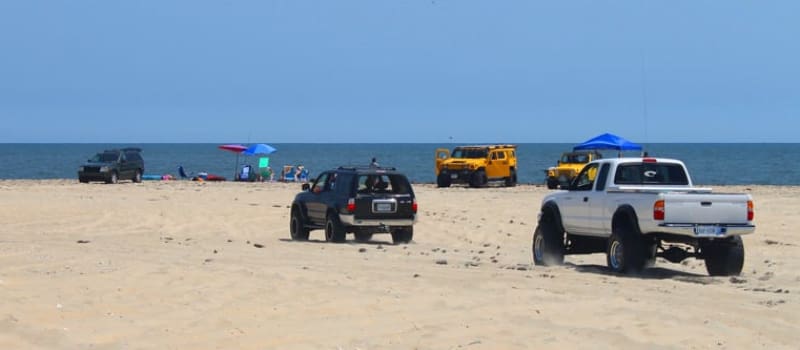
Shift into 4WD and select a low gear (usually 2nd or 3rd) to keep RPMs up without excessive torque. This provides a steady power delivery that helps maintain momentum.
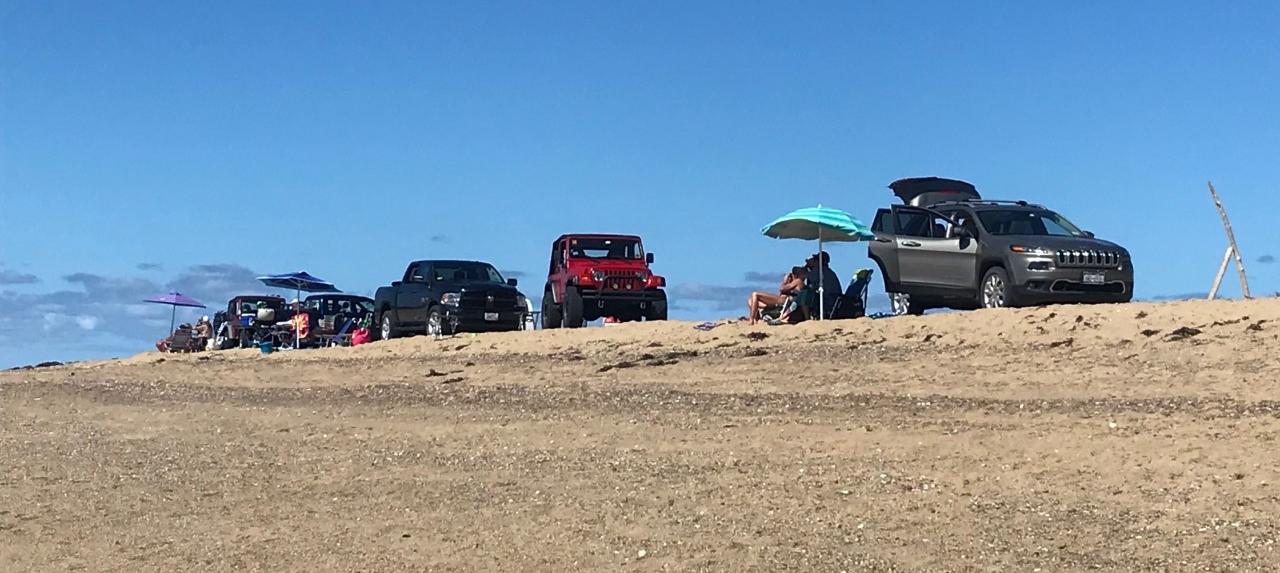
Deflate your tires to 15-20 PSI. This increases the tire's footprint, allowing it to float on the sand rather than cutting into it. Check pressure before entering the water.
As you enter the sand, apply steady, light pressure to the accelerator. Avoid spinning the wheels. If you feel traction loss, ease off slightly and try again.
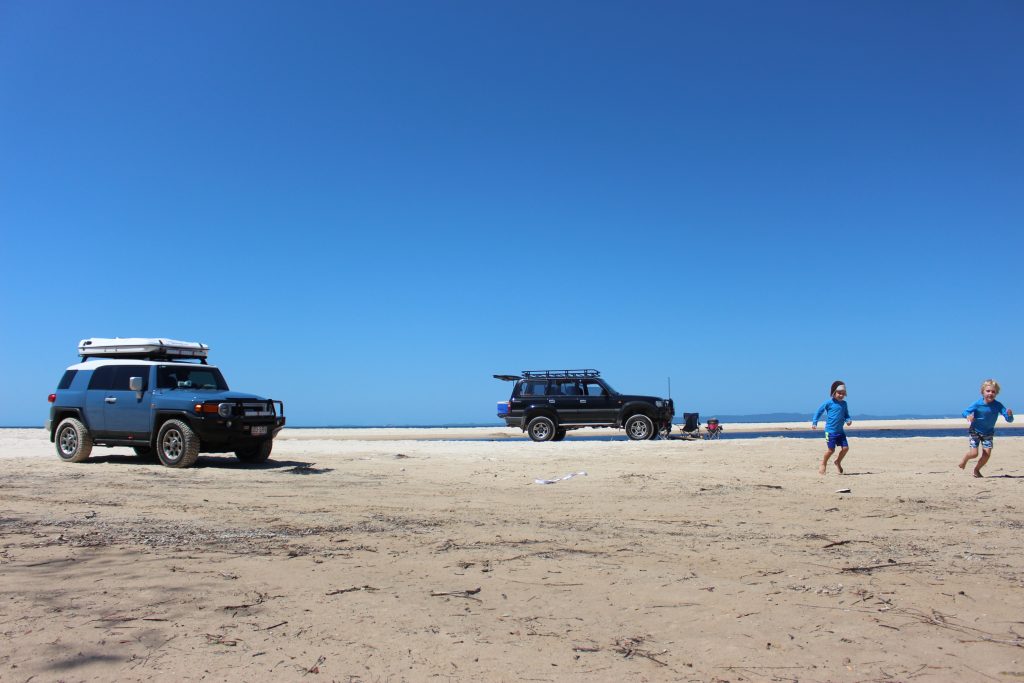
Keep a consistent speed. Do not brake or accelerate suddenly. Let the vehicle's momentum carry you through soft spots. If you stop, you may get stuck.

Make all steering adjustments slowly and smoothly. Sharp turns can cause the vehicle to slide or dig in. Look ahead and plan your line early.
Know when to turn back safely
Beach driving is forgiving until it isn't. The margin between a fun afternoon and a stranded vehicle shrinks rapidly as conditions change. Recognizing the signs early allows you to turn around while you still have traction and time.
Watch the tide line closely. If water is creeping closer to your driving line, or if the sand near the water looks wet and firm, you are likely in the active surf zone. Wet sand can hide deep ruts or sudden drop-offs. If you see other vehicles turning back, respect their decision; they have likely assessed the same conditions.
Assess the sand texture under your tires. Soft, dry sand offers little grip, and speed becomes your enemy. As noted by Off-Road Discovery, traction is already at a premium in softer sand, and any sudden increase in speed can make recovery difficult or impossible if you get bogged down. If your vehicle feels sluggish or the tires are churning without forward progress, the sand is too soft.
Use this checklist to decide if you should continue or retreat:
-
Tide is rising or within 50 yards of your path
-
Sand feels soft and tires are digging in
-
Visibility is poor due to fog or rain
-
You have less than half a tank of fuel
-
No other vehicles are visible ahead
Turning back is not a failure; it is a safety maneuver. If you are unsure, head back to the firmer, packed sand near the dunes or parking area. It is always better to drive an extra mile on hard pack than to spend hours digging out in the surf.
Common beach driving questions answered
Before hitting the sand, it helps to clear up the most frequent points of confusion. These answers focus on the mechanics of traction and vehicle control rather than general theory.
No comments yet. Be the first to share your thoughts!