

Check seasonal driving windows
Beach driving permits are rarely year-round. Most coastal jurisdictions restrict vehicle access to specific months to protect nesting shorebirds and restore dune ecosystems. Before you plan your route, you must verify the current seasonal window for your exact location, as dates can shift based on wildlife activity.
The Outer Banks in North Carolina offers a split schedule. On Hatteras Island, driving is permitted year-round. However, in the towns of Nags Head and Kill Devil Hills, access is limited to October 1 through April 30. This restriction ensures that winter nesting areas remain undisturbed during peak bird migration.
In Florida, St. Johns County requires a beach driving pass from March 1 through September 30. Outside of this window, vehicle access is generally prohibited to allow for natural beach recovery. Always check the official county website for any mid-season adjustments.
Secure the correct beach permit
Beach driving regulations vary significantly by county and season. In many jurisdictions, a permit is mandatory from March through September, while off-season driving may be unrestricted or require different credentials. Always verify the specific dates and requirements for your local area before heading to the shore.
The acquisition process generally falls into three categories: annual passes for regular drivers, daily permits for visitors, and specialized video-requirement zones that mandate safety training. Understanding these distinctions prevents fines and ensures you are compliant with local wildlife protection laws.
1. Check seasonal requirements and zones
Before purchasing, confirm if you are entering a regulated zone. Some counties, like St. Johns County, require passes from March 1 through September 30. Others may have video-training requirements, such as the Outer Banks, where drivers must watch a short instructional video before receiving a permit. St. Johns County Beach Services and Outer Banks driving guides provide official calendars.
2. Choose between annual and daily passes
If you plan to drive on the beach multiple times during the season, an annual pass is usually more cost-effective. Daily passes are available for one-time visitors but can add up quickly. Annual permits often cover the entire regulated season, while daily permits are valid for 24 hours from the time of purchase.
3. Purchase online or at toll booths
Most counties offer online purchasing through their official parks or beach services portals. If you are already at the beach, look for designated toll booths or ranger stations. These locations typically accept cash and credit cards. Keep your permit visible on your dashboard or in your glove compartment for inspection by law enforcement.
4. Complete video training if required
In zones with strict safety protocols, you may need to complete a brief video course before your permit is activated. This training covers tire pressure adjustments, driving techniques on sand, and wildlife awareness. Once completed, the system will issue your digital or physical permit. This step is non-negotiable in areas like the Outer Banks.
5. Display your permit correctly
Ensure your permit is clearly visible. Some counties require a physical decal on your windshield, while others accept a digital QR code on your phone. Failing to display your permit correctly can result in a citation, even if you have purchased a valid pass.
Adjust tire pressure for sand
Proper tire deflation is the single most important adjustment for beach driving. Lowering your pressure increases the tire's contact patch, allowing the vehicle to float on top of the sand rather than digging in. This technique prevents getting stuck and reduces the environmental impact on fragile dune ecosystems.
Recommended PSI for 2026
While specific requirements can vary by county, the standard baseline for most recreational beach driving remains consistent. Currituck County and other major access points continue to recommend the following targets:
These figures provide a balance between traction and sidewall support. Dropping below 15 PSI risks damaging the tire bead or rim, especially on hard-packed sand or when encountering ruts. Always consult your specific vehicle manufacturer’s guidelines, as some modern run-flat tires or heavy off-road setups may require different pressures.
Step-by-Step Deflation Process
Follow this sequence to ensure your tires are at the correct pressure before entering the sand.
Before deflating, park your vehicle on solid, paved ground or hard-packed sand. Never deflate tires while on soft sand, as the vehicle may sink or become unstable during the process. Engage the parking brake and turn off the engine.
Use a reliable digital tire pressure gauge to check the cold pressure of all four tires. Compare the reading against your vehicle’s door jamb sticker for the recommended on-road pressure. This establishes your baseline and helps you calculate how much air to release.
Press the valve stem core gently with your gauge or a small tool to release air in short bursts. Check the pressure frequently. It is easier to let out more air than to add it back in. Aim for the target PSI (e.g., 20 PSI) for your vehicle class.
After releasing air, wait a few minutes for the tire sidewalls to settle. Recheck the pressure with your gauge. If you are slightly over or under, adjust accordingly. Ensure all four tires are at the same pressure to maintain balanced handling on the beach.

Locate the nearest air station before you exit the beach. Most official beach access points provide air pumps near the parking areas. Inflate your tires back to the manufacturer’s recommended on-road pressure immediately after driving. Driving on deflated tires on pavement causes rapid overheating and tire failure.
Verify vehicle clearance and drive
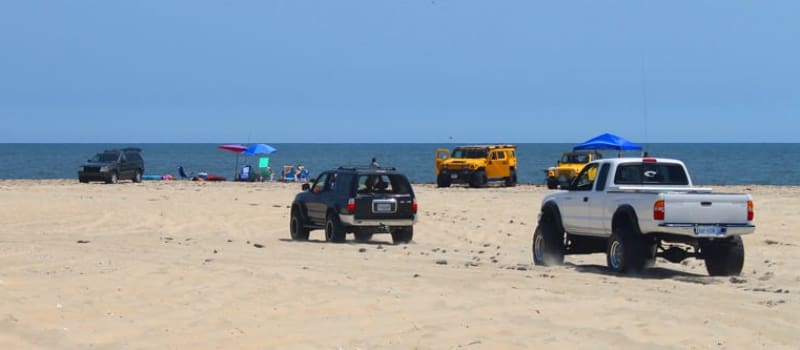
Before launching your vehicle onto the sand, you must confirm it meets the necessary mechanical requirements. While most cars can handle short, hard-packed passages, extended beach driving demands a four-wheel drive (4WD) system. All-wheel drive (AWD) vehicles often lack the low-range gearing needed to maintain traction in loose or compact sand, making them prone to getting stuck. For the best control over all four wheels, a dedicated 4x4 is the standard choice for traversing dunes and covering long distances along the shore.
Ground clearance is equally critical. Sand acts as a soft surface that can quickly bury a vehicle with low profile. We recommend at least 7.5 inches of ground clearance to prevent the undercarriage from dragging or becoming high-centered. Check your manufacturer’s specifications to ensure your specific make and model is sufficient for off-road use. If your vehicle sits low, stick to the hard-packed zones near the water line and avoid the softer, drier sand further up the beach.
Once your vehicle is verified, proceed with caution. Treat the beach like a state highway; in many jurisdictions, standard licensing, registration, and road rules apply. Speed limits are typically strict, often capped at 25 MPH, to protect both pedestrians and wildlife. Always stay on the designated driveable beach areas. Operating a vehicle above the high-tide line or on the landward side of the driveable zone is prohibited in many regions, including Washington State under WAC 352-37-030, unless you have specific official permission.
Drive smoothly and avoid sudden acceleration or hard braking, which can cause your tires to dig in. Keep your eyes on the horizon and scan for tide changes, as rising water can quickly cut off your escape route. By respecting the terrain and local regulations, you ensure a safe and legal experience for everyone on the coast.
Common beach driving mistakes
Even experienced drivers face fines or vehicle recovery when they overlook local regulations. The 2026 enforcement cycle has tightened penalties for permit violations and nesting season encroachments. Avoiding these errors protects your vehicle and the coastal environment.
Driving without a visible permit
Many counties now require permits to be displayed on the dashboard or windshield, not just in the glove box. Officers can issue citations for non-visible permits. Ensure your 2026 beach driving permit is clearly legible from the outside.
Ignoring tide and nesting zones
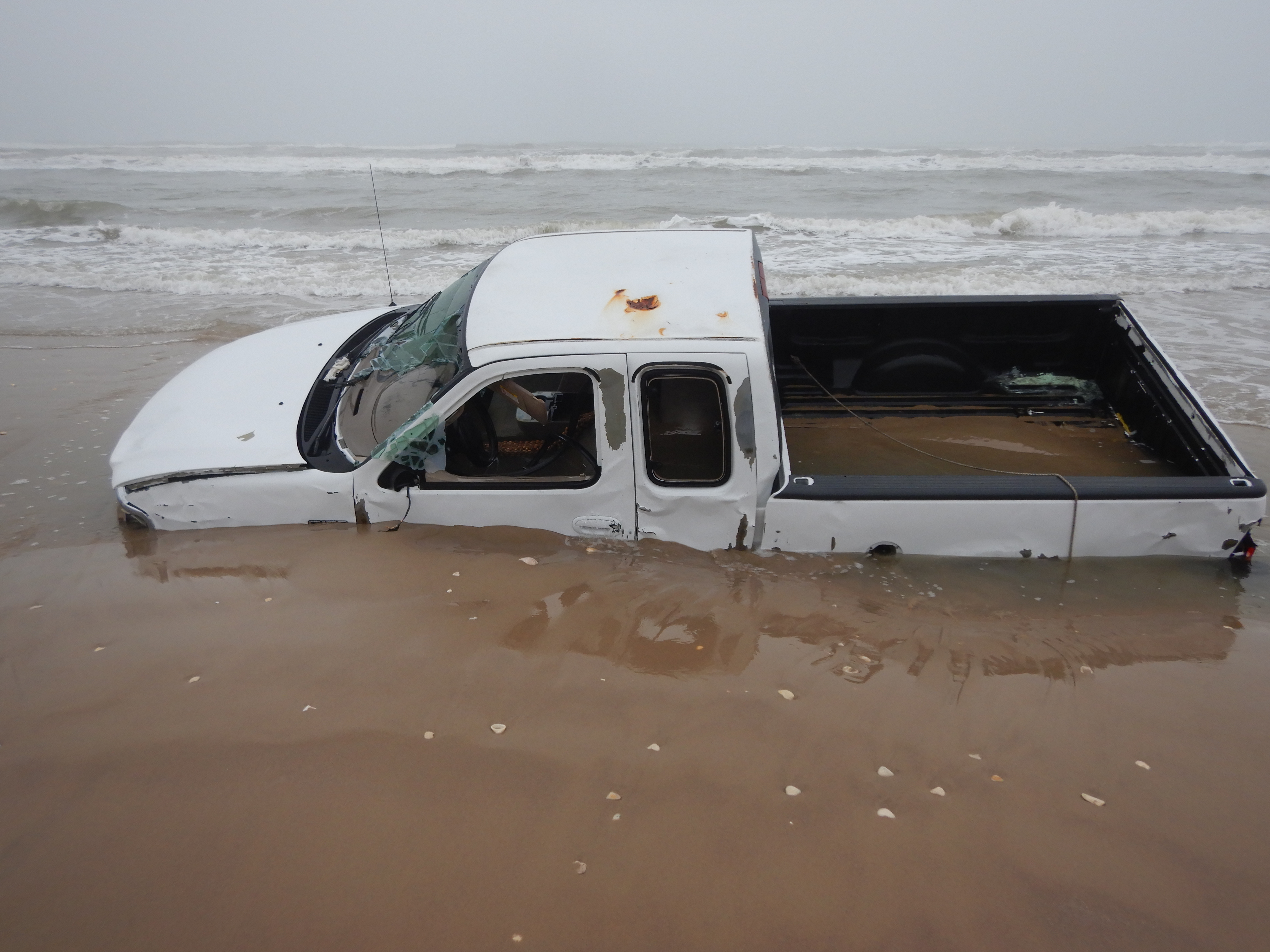
Driving in wet sand or restricted nesting areas is the most common cause of vehicle recovery. Tides can rise quickly, trapping vehicles in soft sand. Additionally, many southeastern beaches prohibit driving on dunes and nesting zones from March to September. Check daily tide charts and posted signage before entering the sand.
Improper tire pressure
Driving on hard-packed sand with standard tire pressure reduces traction and increases the risk of getting stuck. Deflating tires to 15–20 PSI increases the contact patch, allowing better control. Always reinflate tires before leaving the beach to prevent blowouts on pavement.
Skipping vehicle inspection
Sand and salt accelerate corrosion and can clog air filters. Inspect your air intake, undercarriage, and brake lines before and after each drive. A quick rinse with fresh water can prevent long-term damage.
No comments yet. Be the first to share your thoughts!