

Check permit requirements before you go
Beach driving is not a universal right; it is a regulated privilege that varies by location, season, and local ordinance. Before you pack your tires or plan your route, you must verify the specific legal status of the beach you intend to drive on. Treating the shoreline as an open highway can result in steep fines, vehicle impoundment, or ecological damage.
In many regions, particularly along the southeastern United States, driving is strictly prohibited on nesting beaches to protect sea turtles and shorebirds. Beachapedia notes that beach driving is prohibited on the majority of nesting beaches in the southeastern US by law, regulation, or management plan [[src-5]]. Attempting to drive in these protected zones without authorization is illegal and carries significant penalties.
Where driving is permitted, it usually requires a specific permit. For example, in Gulf County, Florida, you cannot drive on the beaches without a permit, which is valid until December 31st of the year issued [[src-4]]. Similarly, in the Outer Banks, North Carolina, rules are split by area: Hatteras Island allows year-round driving, while Nags Head and Kill Devil Hills restrict access to October 1 through April 30 [[src-1]].
Permit systems exist to manage traffic density and protect fragile dune ecosystems. Some areas require permits to be purchased online in advance, while others allow on-site purchases at local tax collector offices or ranger stations. Always carry a physical copy or a digital version of your permit in the vehicle, as rangers frequently patrol designated driving zones. Ignorance of the rules is rarely accepted as a valid defense, so doing your homework before hitting the sand is the most critical step in your preparation.
Air down tires to the correct pressure
Lowering tire pressure increases the contact patch, allowing the vehicle to float on top of the sand rather than digging in. For most SUVs and light trucks, the standard target is 15 to 20 PSI. Heavier vehicles, such as ¾-ton 4x4s, typically require higher pressures around 35 PSI to maintain structural integrity while still gaining traction.
Use a reliable air gauge to verify pressure before entering the beach. Many driving regulations require drivers to carry an air compressor to reinflate tires before leaving the shoreline. Failing to air down sufficiently is the most common cause of getting stuck, while over-inflating reduces traction and increases the risk of losing control on soft surfaces.
Follow speed limits and driving etiquette
Driving on sand is fundamentally different from pavement. The surface gives way under tires, which increases stopping distances and reduces traction. To stay safe and compliant with beach driving regulations, you must adjust your speed and awareness accordingly.
Observe posted speed limits
Speed limits on beach access roads and park beaches are typically set at 15 mph. This limit is not arbitrary; it accounts for the soft substrate and the presence of wildlife or pedestrians. If you see a posted sign indicating a different speed, follow that specific instruction. Exceeding these limits, especially in protected nesting areas, can result in significant fines and legal penalties.
Yield to pedestrians and wildlife
Vehicles must always yield the right-of-way to pedestrians, cyclists, and wildlife. Beachgoers may be distracted by the environment, and animals like shorebirds or crabs may be difficult to spot until you are close. Slow down when approaching crowds or narrow paths. If you encounter a protected species, stop immediately and give them space to avoid disturbing their habitat.
Stay within designated zones
Most beaches have clearly marked driving zones, often indicated by ropes, flags, or painted lines. Staying within these zones protects the dune ecosystem and prevents erosion. Driving outside these boundaries is not only dangerous but also illegal in many jurisdictions. Always respect boundary markers and avoid driving on dunes or in restricted areas, even if the sand looks firm.
Look for speed limit signs and zone markers before entering the driving area. Note the 15 mph limit and any specific restrictions for nesting seasons.
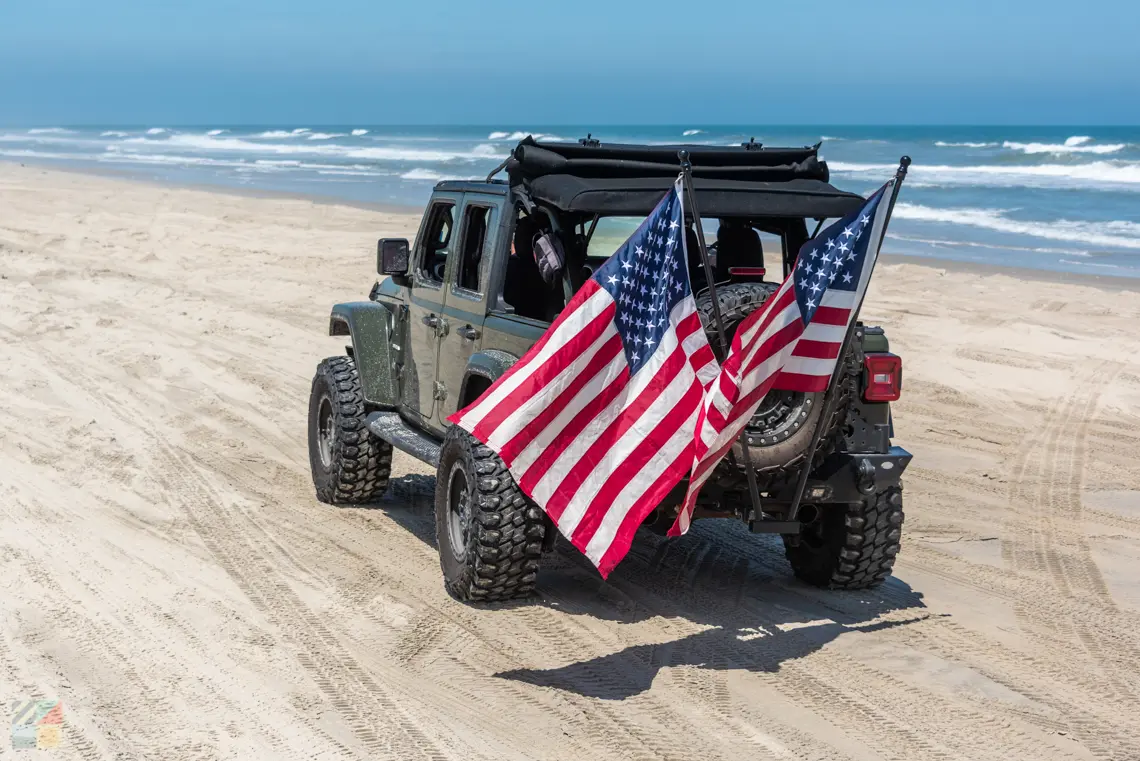
Maintain a consistent speed below the limit. Avoid sudden acceleration or braking to prevent getting stuck or losing control on the soft sand.

Slow down and stop for pedestrians, cyclists, and wildlife. Ensure you are within the designated driving lane and not encroaching on protected areas.
Prepare your vehicle for soft sand
Before you enter the water line, your vehicle needs specific adjustments to handle loose terrain. The difference between a smooth drive and a recovery tow often comes down to tire pressure and traction settings. Follow this sequence to ensure your 4WD is ready for the beach driving regulations and safety requirements.
Check tire pressure and 4WD settings
Air down your tires to 15–20 psi. This increases the contact patch, allowing the tread to "float" on top of the sand rather than digging in. If you are unsure of the exact pressure, check a reliable gauge before leaving home.
Next, engage your four-wheel drive system. Most vehicles require shifting into 4-Low for steep dunes or deep sand, while 4-High may suffice for firm, packed sand near the dunes. Finally, turn off traction control. Modern stability systems may cut power if they detect wheel spin, leaving you stranded. Disabling it allows the wheels to find grip without electronic interference.
Essential gear for soft sand recovery
Even with proper preparation, getting stuck can happen. Carry a tire deflator for precise pressure adjustments and a set of tire repair tools. A wide, flat recovery board (often called a "Maxtrax" or "Tred") is invaluable for providing traction if your wheels begin to spin in deep sand.
Always keep a shovel with a wide blade for digging out tires. A heavy-duty tow strap, rated for your vehicle's weight, is non-negotiable. Avoid using bungee cords or rope, which can snap and cause serious injury. Check your battery health and carry a jump starter, as sand can sometimes interfere with electrical connections or drain power if you're waiting for assistance.
Avoid protected nesting areas
Staying off restricted zones is the most critical safety rule for beach driving, protecting both your vehicle and vulnerable wildlife. In many regions, particularly along the southeastern United States, driving is prohibited on the majority of nesting beaches by law. These restrictions are not suggestions; they are enforced regulations designed to prevent tire tracks from disturbing sea turtle nests or disorienting hatchlings.
During nesting season, look for posted signage marking closed areas. Signs often appear at trailheads, parking lots, or along the shoreline. Ignoring these markers can result in severe penalties. If you break any beach driving laws in a protected nesting area, you are subject to a fine of not less than $250, and potentially much more depending on local ordinances.
Respect the boundaries. If you are unsure whether an area is open, assume it is closed. The ecological impact of disturbing a nest can last for months, but the legal consequences are immediate. Always drive only in designated zones to ensure a safe and legal experience for everyone.
Common beach driving mistakes to avoid
Even experienced drivers can run afoul of local ordinances or endanger themselves on soft sand. The most frequent violations involve ignoring posted speed limits, which are often as low as 15 mph in protected park areas. Driving alone is another serious error; if your vehicle gets stuck in the sand, you will need assistance to recover without damaging the dunes or your own equipment.
Before you launch your vehicle, always check the tide charts. Driving during high tide or on wet sand can lead to immediate sinking and costly rescue operations. Always carry a tire pressure gauge to monitor your air levels, as under-inflation increases the risk of getting high-centered on ruts.
Beach Driving Preparation Checklist
Before you cross the tide line, ensure your paperwork and vehicle are ready. A missing permit or incorrect tire pressure can turn a fun trip into a costly violation or a stuck vehicle.
Secure Your Permit
Verify you have a valid beach driving permit for your specific county and dates. Regulations vary by location and season, so check the local tax collector’s office or official tourism site. Driving without a permit is prohibited in most managed areas and can result in steep fines.
Adjust Tire Pressure
Lowering your tire pressure increases the footprint, allowing the vehicle to float on the sand rather than dig in. For most SUVs and half-ton 4x4s, aim for 20 PSI. Heavier three-quarter-ton trucks may require 35 PSI. Use a reliable gauge to check pressure before departure, as heat from driving will increase the reading.
Pack Essential Gear
Bring a high-lift jack, a sturdy shovel, and a tire deflator kit. A brass referee whistle and lanyard is a practical addition for signaling help if you get stuck in soft sand. Always carry a first-aid kit and extra water, as cell service is often unreliable on remote stretches.
Frequently asked questions about beach driving
Before hitting the sand, confirm your permit status and vehicle setup. Regulations vary by county, so always check local tax collector offices for the most current rules.
How much does a beach driving permit cost?
Permit fees vary by jurisdiction. In the Outer Banks, you must watch a 10-minute safety video and pay a weekly or annual fee to acquire a permit. Gulf County requires a permit valid until December 31st of the year issued, with fees set by the local tax collector.
Can I drive on the beach without a permit?
No. Driving on the beach without a valid permit is prohibited and can result in significant fines. You must display your permit clearly on your vehicle. Always carry your permit and registration while driving on the beach.
What are the vehicle requirements for beach driving?
Most jurisdictions require vehicles to have a tire pressure gauge and a spare tire. You must air down your tires to specific PSI levels (often 15-20 PSI) to prevent sinking in the sand. Four-wheel drive is recommended but not always mandatory; check local rules.
No comments yet. Be the first to share your thoughts!