

Calculate Your Beach Driving Costs
Beach driving involves more than just fuel; it requires a specific budget for permits, equipment adjustments, and potential penalties. Understanding these upfront costs helps you avoid unexpected fines and ensures your vehicle is prepared for the terrain.
Permit Fees
Most jurisdictions require an annual permit to drive on public beaches. These fees vary by county and vehicle type. For example, Gulf County, Florida, mandates a permit that is valid until December 31st of the year issued. Without this permit, driving on the beach is prohibited. Always check with your local county tax collector for the most current rates.
Tire Inflation and Equipment
Driving on sand requires lowering your tire pressure to increase surface area and traction. Most regulations specify a maximum PSI (pounds per square inch). For instance, Currituck County, North Carolina, recommends 20 PSI for SUVs and ½-ton 4x4s, and 35 PSI for ¾-ton 4x4s. You may need to purchase a portable air compressor or pay at designated air stations located near beach access points.
Potential Fines
Violating beach driving regulations can result in significant fines. These penalties often exceed the cost of a permit. Common violations include driving without a permit, exceeding speed limits, or failing to lower tire pressure. Always carry your permit in the vehicle and adhere to posted speed limits, which are typically much lower than on paved roads.
Where you can legally drive
Beach driving regulations are not uniform; they are determined by local jurisdiction and seasonal wildlife protections. What is legal in one town may be strictly prohibited in the next, often within just a few miles of the same shoreline. Drivers must verify the specific rules for the exact stretch of beach they intend to traverse, as violations can result in significant fines and vehicle impoundment.
The Outer Banks in North Carolina illustrate this variability. In the towns of Nags Head and Kill Devil Hills, beach driving is permitted only from October 1 through April 30. In contrast, Hatteras Island allows year-round access, though specific zones may still have restrictions. This patchwork of rules means that a permit valid in one municipality may not grant access in another, even if they are adjacent.
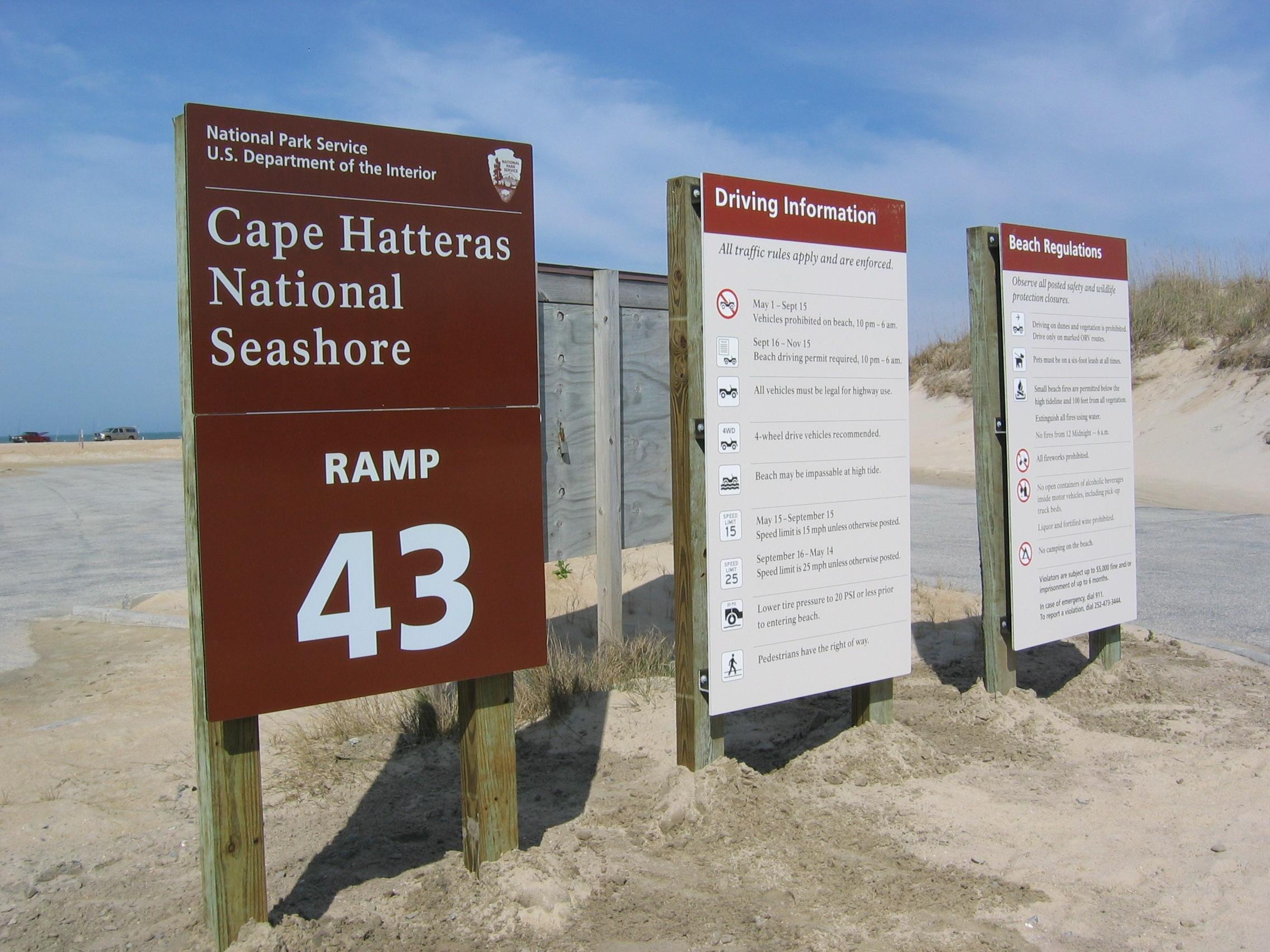
National Park Service signs at Cape Hatteras clearly delineate where off-road vehicle travel is permitted, emphasizing the importance of reading posted markers.
Seasonal restrictions are primarily driven by sea turtle nesting and shorebird protection. During nesting season, typically May through September, large sections of beach are closed to vehicle traffic to prevent disturbance to fragile ecosystems. These closures are not optional; driving in protected nesting areas can result in fines starting at $250, with penalties increasing for repeated offenses or severe ecological damage.
The following table compares permit validity and access windows for major driving locations to help you plan your route.
| Location | Access Window | Permit Requirement | Key Restrictions |
|---|---|---|---|
| Outer Banks (Nags Head/KDH) | Oct 1 - Apr 30 | Daily/Annual | Closed during nesting season |
| Outer Banks (Hatteras Island) | Year-round | Annual/Daily | Specific zones may close for wildlife |
| East Hampton, NY | Seasonal | Annual | Fines start at $250 for violations |
| Cape Hatteras NPS | Year-round (Zoned) | Annual Vehicle Permit | Strict speed limits (15-25 mph) |
Vehicle requirements and tire pressure
Beach driving places unique mechanical demands on your vehicle that standard road driving does not. The soft, shifting substrate requires specific adjustments to prevent getting stuck, damaging your undercarriage, or violating local environmental protections. Ignoring these mechanical prerequisites can lead to expensive recovery fees, vehicle damage, and legal penalties.
Tire Pressure Guidelines
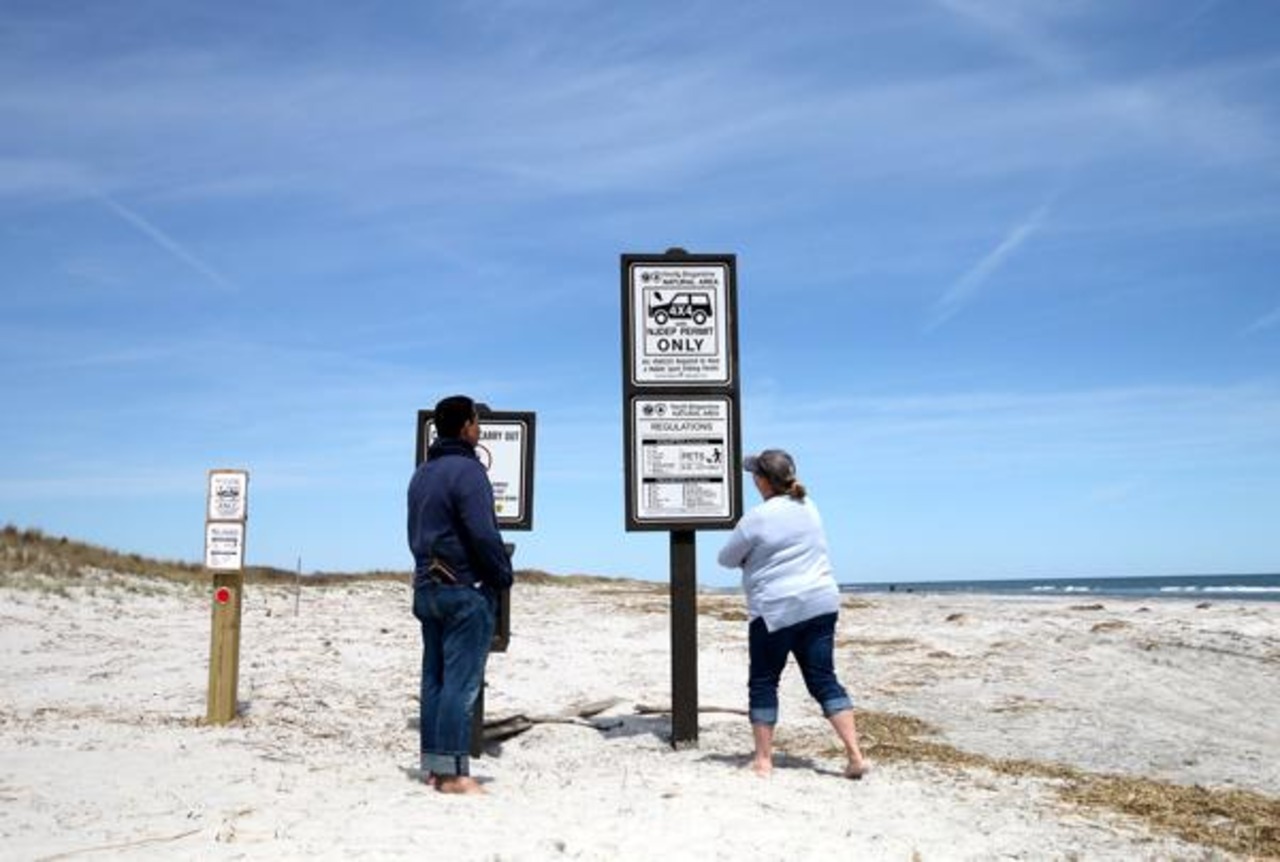
Proper tire inflation is the most critical adjustment for beach driving. Deflating your tires increases the surface area in contact with the sand, reducing ground pressure and preventing the vehicle from sinking. Most county regulations mandate specific PSI ranges to balance traction with environmental protection.
According to Currituck County regulations, SUVs and half-ton 4x4 vehicles should be deflated to 20 PSI. Heavier three-quarter-ton 4x4s typically require 35 PSI to maintain stability without excessive sinking. Always check local ordinances before driving, as specific zones may have stricter requirements. Over-inflating tires on sand reduces traction and increases the risk of rollover, while under-inflating beyond recommended limits can damage tire beads or sidewalls.
Ground Clearance and Drivetrain
Beyond tire pressure, your vehicle must have sufficient ground clearance to navigate uneven sand dunes and wet patches without dragging the undercarriage. Industry standards generally recommend at least 7.5 inches of ground clearance for safe beach navigation. Vehicles with lower clearance, such as standard sedans or lowered crossovers, are prone to getting high-centered on soft sand or submerged in tidal pools.
Four-wheel drive (4WD) or all-wheel drive (AWD) systems are strongly preferred for beach driving. 4WD provides the necessary torque distribution to handle slippery, low-traction surfaces. However, drive type alone is not a substitute for proper tire pressure and driver skill. Always avoid driving over dunes or beach vegetation, as this causes significant ecological damage and is strictly prohibited in most jurisdictions, including Florida’s managed areas 1.
Speed limits and safety fines
Use this section to make the Beach Driving Regulations decision easier to compare in real life, not just on paper. Start with the reader's actual constraint, then separate must-have requirements from details that are merely nice to have. A practical choice should survive normal use, maintenance, timing, and budget. If a recommendation only works in an ideal situation, call that out plainly and give the reader a fallback path.
The simplest way to use this section is to write down the must-have criteria first, then compare each option against those criteria before weighing nice-to-have features.
Beach Driving Prep Checklist
Before you leave your driveway, treat this verification step as your final safety net. Beach driving carries high stakes: legal fines, vehicle damage, and environmental harm are all preventable with a systematic pre-drive review. This checklist ensures you have the permits, equipment, and knowledge required by local authorities.
Obtain the correct permit for your specific county or national seashore. In many jurisdictions, such as the Outer Banks, this requires watching a mandatory safety video and paying a weekly or annual fee. Verify the permit is visibly displayed in your vehicle window as required by local law. Driving without a permit can result in steep fines that far exceed the cost of the license itself.
Ensure your vehicle has at least 7.5 inches of ground clearance to avoid getting high-centered on soft sand. Check that your tires are properly deflated to the recommended PSI (typically 15-20 PSI) for traction, and that you have a tire deflator and air compressor on board. Verify that your 4WD or AWD systems are functional and that you have recovery gear like a shovel and traction mats.
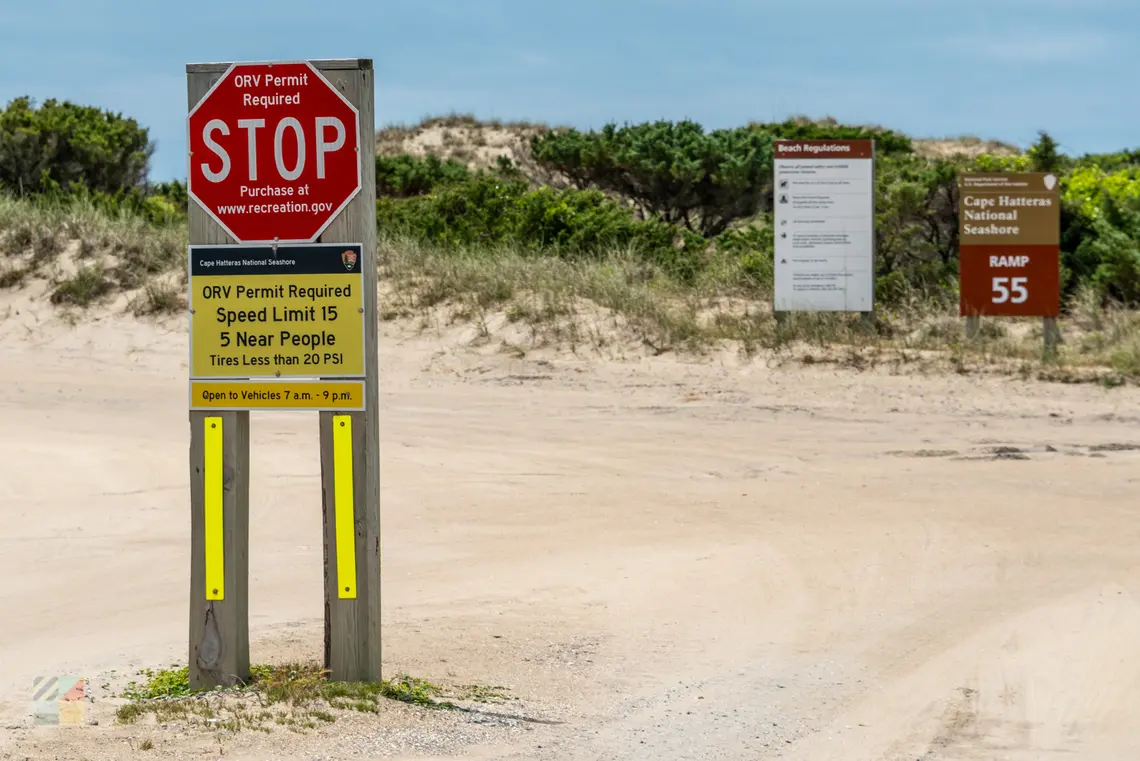
Speed limits on beaches are often strictly enforced, typically capped at 15-20 mph to protect wildlife and pedestrians. Identify the designated driving zones versus protected areas where driving is prohibited. Check the tide schedule to ensure you are not driving in areas that will be submerged during your trip, as getting trapped by rising water is a critical safety hazard.
Completing these steps before arrival prevents costly legal issues and ensures a safe experience for you and the environment. Always consult official county or national park websites for the most current regulations, as rules can change seasonally.
Common questions about beach access
Navigating beach driving regulations requires understanding local laws and vehicle requirements. Rules vary significantly by jurisdiction, and non-compliance can result in substantial fines or vehicle recovery costs. Always verify current permit status and seasonal restrictions with official county or state sources before heading to the coast.
Vehicle specifications are just as critical as legal permits. Driving on soft sand demands specific mechanical adaptations to prevent getting stuck or damaging the environment. Ensure your tires are properly deflated to increase surface area and traction, and always carry recovery gear such as a shovel, jack, and tow strap.
No comments yet. Be the first to share your thoughts!