

Check local rules and tides
Before you point your vehicle toward the sand, you need to verify two things: where you are legally allowed to drive and when the water will rise. Beach driving isn't a free-for-all; regulations vary wildly between public beaches, private resorts, and state parks. Ignoring these rules can result in hefty fines, towing fees, or being stranded when the tide comes in.
Start by searching for the specific beach you plan to visit. Look for official park websites or local government pages that outline driving permits, seasonal restrictions, and required tire pressure levels. Some beaches require a daily pass, while others are closed entirely to vehicles during nesting season for sea turtles or birds.
Tide charts are your most important tool for safety. The window for driving on the beach is often much shorter than you think. Plan your trip around low tide to maximize your driving time and ensure you have enough elevation to escape if conditions change. Never rely on guesswork; a rising tide doesn't care about your itinerary. If the water is already creeping up the beach, stay out.
Combine your permit check with a tide lookup. Many official park sites publish both the driving regulations and the daily tide tables in one place. If you can't find an official source, assume the beach is off-limits or that the tide will rise faster than expected. It is better to cancel a trip than to get stuck in the sand or pay a penalty for illegal driving.
Adjust tire pressure for sand
Lowering your tire pressure is the single most important step for beach driving. It allows the tire to expand, creating a larger contact patch that floats on top of the sand rather than digging into it. Think of it like snowshoes for your car: more surface area means less pressure per square inch, which prevents your vehicle from getting stuck.
Most off-road guides recommend dropping your pressure to between 20 and 25 PSI. If the sand is particularly soft or deep, you may need to go even lower, sometimes down to 15 PSI, though this requires careful handling to avoid damaging the tire bead. Always check your vehicle's specific recommendations, as some modern run-flat tires or heavily loaded SUVs may have different limits.
Before you leave your parking spot, use a reliable tire pressure gauge to verify each tire. Inflate them back to normal road pressure (usually 30-35 PSI) as soon as you leave the beach. Driving on hard pavement with low tire pressure generates excessive heat and can ruin your tires quickly.

Remove the valve stem caps from all four tires. Keep them in a safe place so you don't lose them on the beach. Use a tire pressure gauge to check your current starting pressure.
Press the metal pin in the valve stem briefly to release air, then check your gauge frequently. Aim for 20-25 PSI for standard sand conditions. If the sand is very soft, you may go lower, but be cautious.
Bring a portable air compressor or visit a gas station immediately after leaving the sand. Inflate all tires back to the manufacturer's recommended PSI (usually 30-35 PSI) to ensure safe handling on hard roads.
Drive near the water line
The best place to drive on the beach is right where the tide meets the sand. This strip of wet, packed sand offers significantly better traction than the dry, loose dunes further inland. When you drive on dry sand, your tires dig in, causing you to lose momentum and potentially get high-centered. Wet sand is firm enough to support the vehicle's weight without sinking, allowing you to maintain steady speed and control.
Aiming for the water line is a fundamental rule of beach driving because it keeps you on the most stable surface available. While the tide may shift slightly, the wet sand remains consistent enough for safe travel. Avoid driving on the dry upper beach unless absolutely necessary, as the loose grains will quickly drain your vehicle's power and increase the risk of getting stuck.
If you must cross a section of dry sand, do so slowly and with steady momentum. Do not stop or make sharp turns, as this will cause the tires to dig in. Instead, keep the vehicle moving forward in a straight line until you reach the wet sand again. This approach minimizes the chance of getting stuck and makes the drive much smoother.

Maintain steady momentum
Driving on sand is like riding a bicycle; if you stop, you fall over. The goal is to keep the vehicle moving forward without spinning the tires, which digs a hole and traps the car. Momentum is your best defense against getting high-centered. Once you lose speed, regaining it requires excessive throttle that only worsens the rut.
Start by selecting the right gear before you hit the soft sand. Use a low gear (1st or 2nd in manual, or "L"/"1" in automatic) to keep engine RPMs high and torque steady. This prevents the transmission from hunting for gears, which causes jerky movements that break traction. If you have a 4WD system, engage it now.
Apply throttle smoothly and consistently. Think of the gas pedal as a sensitive instrument, not a switch. Press gently to build speed, then maintain that pressure. Avoid sudden acceleration or braking. If you feel the tires spinning, ease off the gas slightly to let them find grip, then reapply steady pressure. Sharp turns should be avoided; instead, steer wide and gradually to maintain your forward vector.
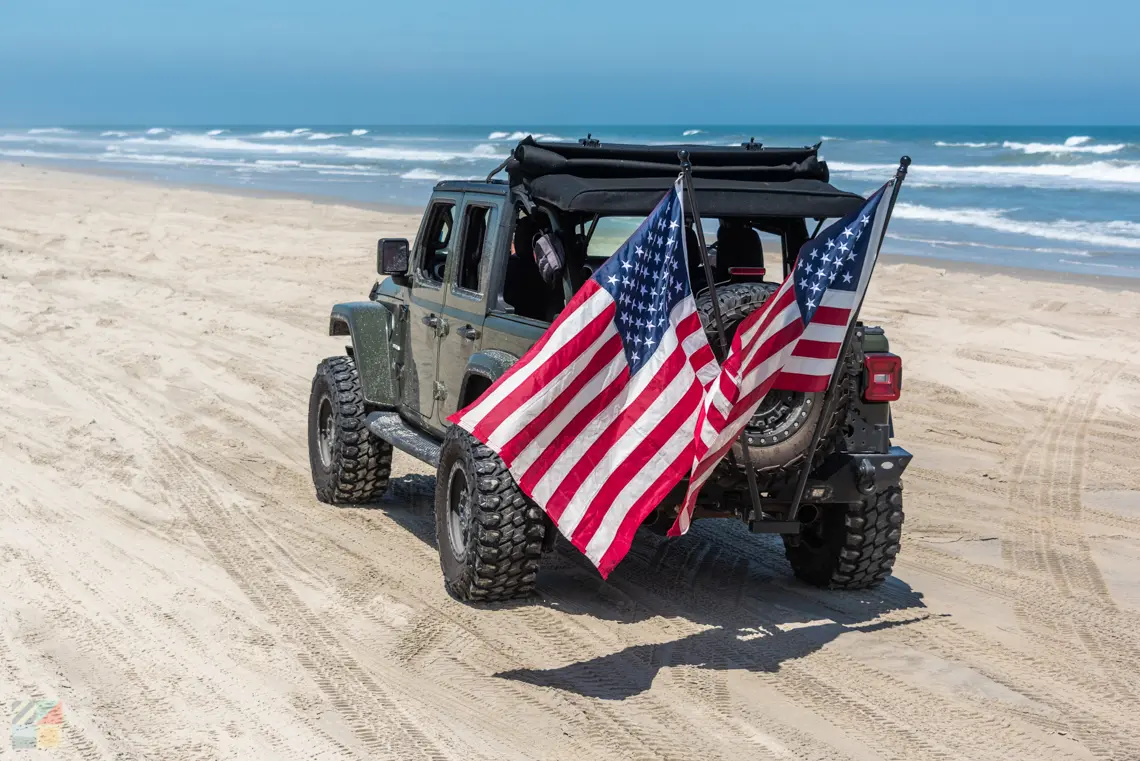
Engage 4WD and shift into a low gear (1st or 2nd) before entering deep sand. This keeps engine RPMs high and provides consistent torque without transmission hunting.
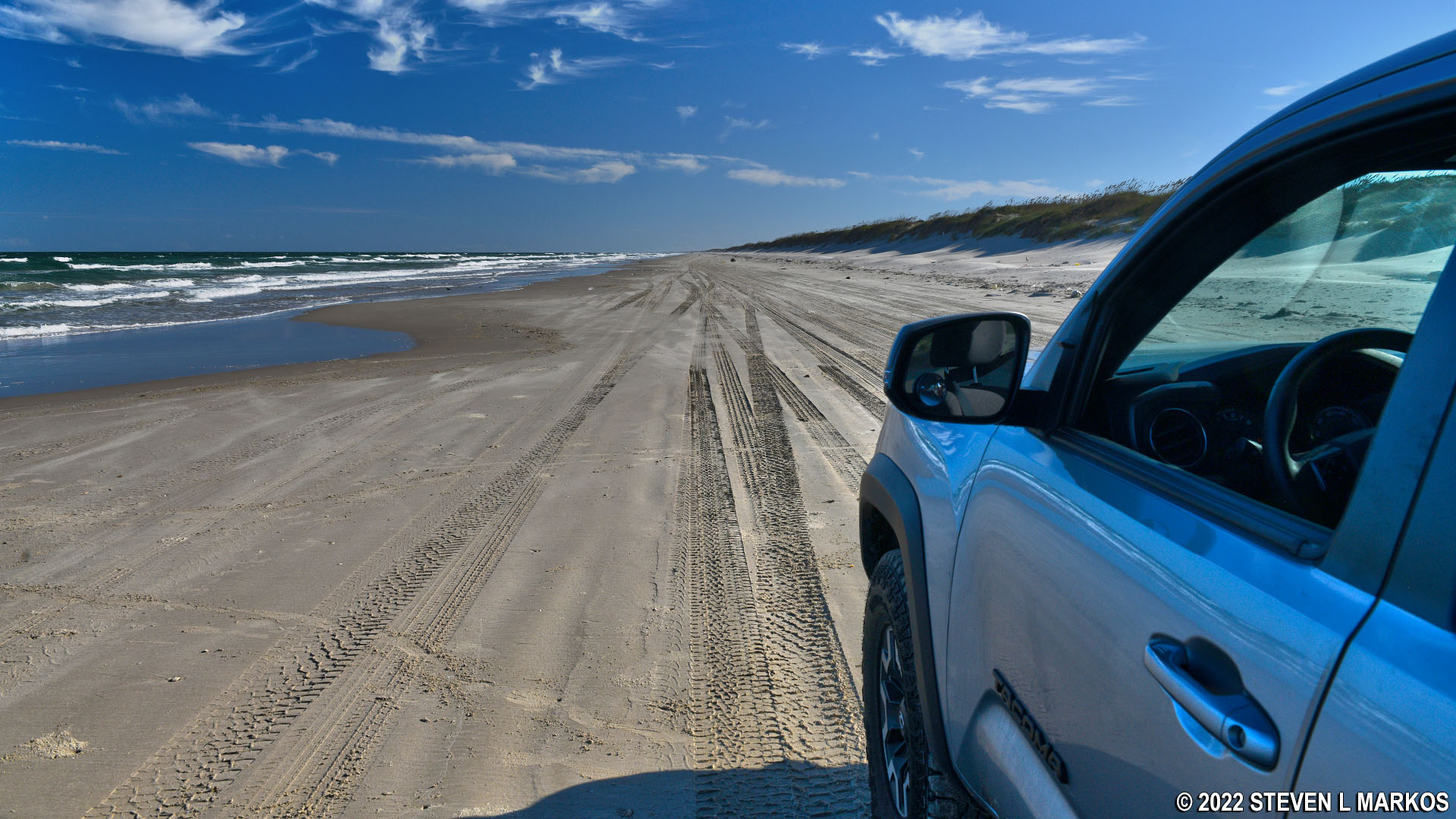
Press the gas pedal gently and steadily. Avoid jerky movements. If tires spin, ease off slightly to regain traction, then reapply steady pressure to keep moving.
Avoid sharp turns which dig into the sand and kill momentum. Plan your route wide and steer gradually to maintain your forward vector and prevent getting high-centered.
If you do start to sink, do not spin the wheels. Stop immediately, check your tire pressure, and consider adding air if possible. If you cannot adjust pressure, try rocking the vehicle gently or digging out the sand from under the tires. The key is to prevent the vehicle from settling too deeply into the substrate.
Pack essential recovery gear
If your tires sink into soft sand, standard roadside assistance won't reach you. You need to be able to free your own vehicle before the tide comes in or the sand hardens. Packing the right self-recovery kit is the most important safety step in beach driving.
Every 4x4 should carry a dedicated recovery box. This keeps gear organized and prevents items from rolling under seats where they can be lost in the sand. The list below covers the non-negotiable items for getting unstuck safely.
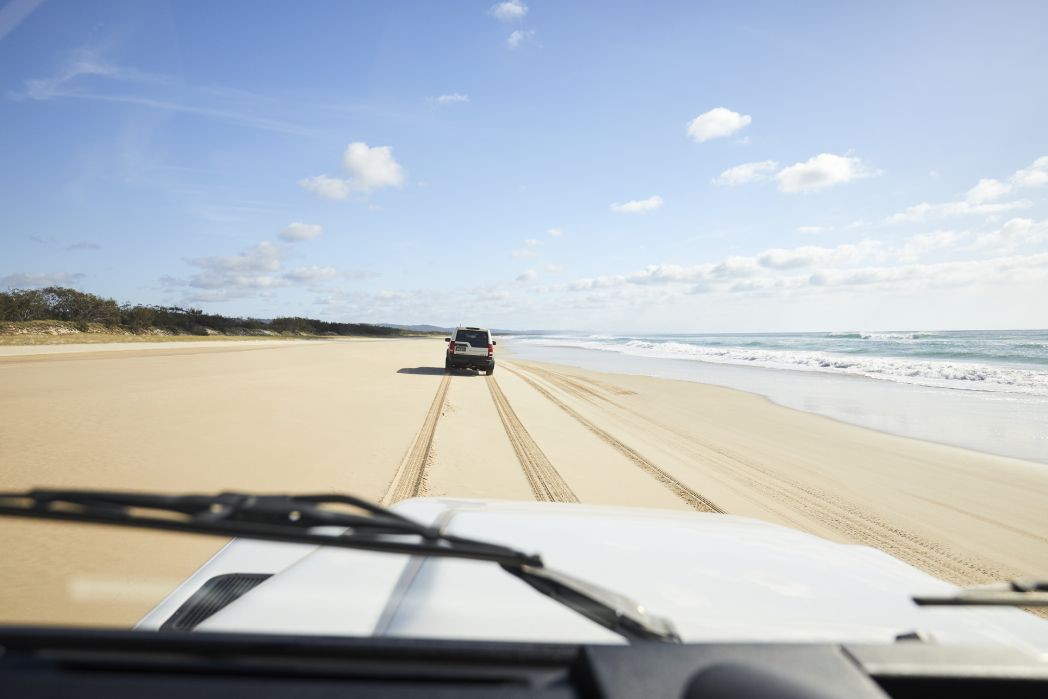
The Essential Kit
Traction Mats These textured plastic or rubber mats provide grip for your tires when they are spinning in loose sand. Place them directly in front of the drive wheels. They are far more effective than random sticks or branches, which can damage your undercarriage.
Shovel A standard garden shovel often bends in deep sand. Look for a wide, flat "sand shovel" or a folding aluminum shovel. You need this to dig out sand packed around your tires and to clear a path for your traction mats.
Recovery Board Similar to traction mats but more aggressive, recovery boards (like Maxtrax) have deep lugs that bite into the sand. They are essential for deep sand conditions where mats alone won't provide enough grip to pull the vehicle out.
Tow Strap You will need a heavy-duty nylon tow strap to pull your vehicle out if you get stuck. Always use a snatch block (pulley) with the strap to double your pulling power and reduce shock loads. Never use a bungee cord or rope, which can snap and cause serious injury.
Air Compressor Lowering your tire pressure increases your surface area and grip. An onboard or portable air compressor lets you reinflate your tires to normal pressure once you are back on firm ground. This prevents bead separation and prepares your vehicle for highway driving.


As an Amazon Associate, we may earn from qualifying purchases.
Keep this gear accessible. If you have to dig through luggage to find your shovel when you are stuck, you are already in trouble. Store it in a dedicated bin or under-seat organizer so it is ready when you need it.
Wash the Vehicle After Driving
Salt and sand are relentless enemies of your vehicle’s lifespan. Once you leave the beach, the clock starts ticking on corrosion. Salt spray settles into every crevice, while fine sand acts as an abrasive paste that grinds away protective coatings and seals. If left to dry, this mixture creates a conductive, corrosive environment that eats through undercarriage components, brake lines, and suspension parts far faster than normal road grime.
A thorough rinse isn’t just about aesthetics; it’s a critical maintenance step. Focus your attention on the undercarriage, wheel wells, and door jambs. These areas trap the most salt and sand, hidden from view but exposed to the elements. Use a pressure washer if available, aiming upward into the wheel arches and underneath the chassis to dislodge trapped grit. Don’t forget the exterior mirrors and door handles, where salt crystals can stiffen mechanisms.
To ensure you don’t miss any critical spots, use this quick checklist:
- Undercarriage: Flush out mud, sand, and salt from the frame rails and exhaust system.
- Wheel Wells: Remove packed sand from behind the tires and around brake calipers.
- Door Seals: Wipe down rubber seals to prevent salt residue from drying and cracking them.
- Exterior Trim: Rinse off salt spray from plastic bumpers and light housings to prevent discoloration.
Skipping this step might seem harmless after one trip, but repeated exposure without cleaning leads to premature rust and mechanical failure. Treat the post-beach wash as non-negotiable maintenance, not an optional cleanup.
Common beach driving: what to check next
Before heading out, address the basics of vehicle requirements and safety protocols. Proper preparation prevents getting stuck and keeps your trip safe.
Always check local rules and tide charts before driving. Keep essential tools like a shovel, jack, and tire deflator kit in your vehicle. Wash your car thoroughly after the trip to remove corrosive salt and sand.
No comments yet. Be the first to share your thoughts!