

Check local rules and permits first
Beach driving is rarely an open invitation. Most coastal areas enforce strict ordinances to protect fragile dune ecosystems and ensure public safety. Before you inflate your tires or pack the recovery gear, you need to confirm that driving is actually permitted at your destination.
Many beaches restrict vehicles to specific zones, often marked by signs or natural boundaries. Driving outside these designated areas can result in heavy fines, vehicle impoundment, or being towed out by officials. Some locations, particularly national seashores and state parks, require a daily or seasonal permit. Others may ban driving entirely during nesting seasons for sea turtles or shorebirds.
Start by searching for the specific beach name followed by "driving regulations" or "permit requirements." Official sources like the National Park Service or local county websites are the most reliable. For example, Cape Lookout National Seashore provides clear guidelines on where and when you can drive. Never assume that because one beach allows 4x4s, the next one over will have the same rules.
If a beach requires a permit, purchase it online in advance if possible. Some locations have limited daily quotas, and arriving without one means you will be turned away at the gate. Keep your permit visible in the windshield if required.
Adjust tire pressure for traction
The single most important mechanical adjustment for beach driving is lowering your tire pressure. This process, often called "airing down," increases the tire's contact patch, allowing the vehicle to float on top of the sand rather than digging in. Without this adjustment, even a powerful four-wheel-drive vehicle will struggle to gain traction on soft surfaces.
Step 1: Check your current tire pressure
Before you leave the pavement, check your tire pressure with a reliable gauge. Most standard passenger vehicles are inflated to 30-35 PSI or higher for road use. This pressure is too high for sand, as it causes the tires to cut into the surface like knives. Note your current pressure so you know how much air to release.
Step 2: Release air to the target PSI
Use a tire deflator or press the valve stem core to release air gradually. For firm, packed sand near the water, aim for 20 PSI. If you are driving on soft, dry dunes, you may need to go as low as 15-18 PSI. Never go below 15 PSI, as this risks damaging the tire bead or rim. Stop frequently to check your pressure, as it is easy to over-deflate.
Step 3: Reinflate before returning to pavement
Once you finish driving on the beach, you must reinflate your tires before driving on hard surfaces. Driving on pavement with low tire pressure generates excessive heat, which can lead to tire failure. Use a portable air compressor or visit a gas station to return your tires to the manufacturer's recommended road pressure (usually 30-35 PSI). Failing to do this is dangerous and can result in a blowout.

Use a tire gauge to record your starting PSI. Standard road pressure is typically 30-35 PSI, which is too high for sand.

Press the valve stem to release air. Aim for 20 PSI on packed sand or 15-18 PSI on soft dunes. Avoid going below 15 PSI to protect your rims.
Use a portable compressor or gas station air to return tires to standard road pressure (30-35 PSI) before leaving the beach. Low pressure on pavement causes overheating and blowouts.
Engage four-wheel drive and steady momentum
Switching to four-wheel drive is the first mechanical step before you touch the sand. Most modern 4WD systems have a low-range gear that multiplies torque, giving you the slow, powerful pull needed to climb soft dunes without spinning your wheels. If your vehicle has a dial or lever for 4WD Low, engage it while stopped or moving very slowly to protect the transmission. For part-time 4WD systems, ensure you lock the front hubs if they are not automatic. This setup ensures power reaches all four tires, providing the traction necessary to float over loose surface sand rather than digging a hole.
Once engaged, your goal is to maintain a consistent speed. Accelerate gently but firmly to build momentum, then ease off the throttle slightly as you hit the softer patches. The key is to keep the wheels turning at a steady pace. Avoid sudden acceleration or braking, which can break traction and leave you stuck. If you feel the vehicle slowing down, apply a little more throttle smoothly rather than jerking the wheel or stomping on the pedal.
Steering inputs should be minimal and gradual. Sharp turns increase resistance and can cause the vehicle to dig in or become high-centered on a dune ridge. Plan your route early and stick to the wet, packed sand near the waterline whenever possible. This surface offers the most resistance and stability. If you must drive on dry sand, keep your steering movements small and predictable. Let the momentum carry you through minor obstacles rather than fighting against the sand with aggressive maneuvers.
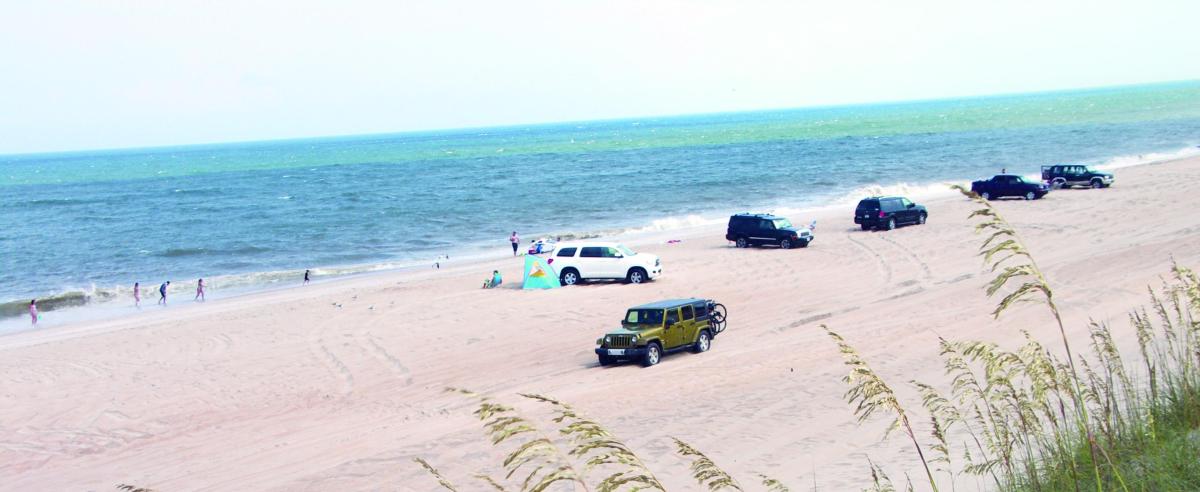
Stop the vehicle or slow to a crawl. Shift the transfer case into 4WD Low. This provides the torque multiplication needed for soft sand. Verify that your front hubs are locked if your truck requires manual engagement.
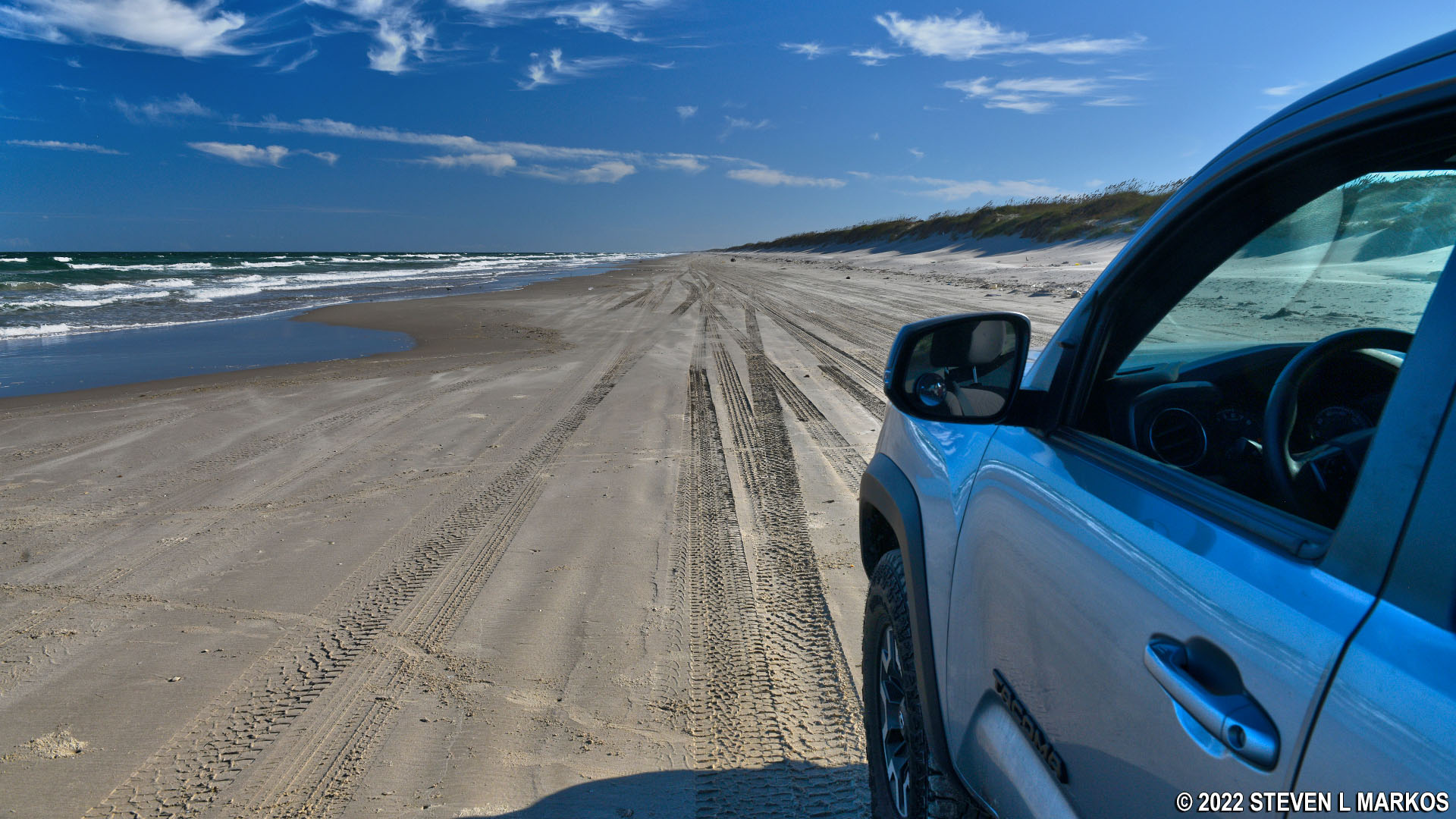
Accelerate smoothly to gain speed before hitting deep, dry sand. Maintain a steady throttle input. Avoid sudden bursts of power that can spin the tires and dig a hole. Let the vehicle’s weight and momentum carry it forward.

Keep steering inputs small and slow. Sharp turns increase drag and can cause the vehicle to get stuck. Plan your path early and follow the natural curves of the beach. Avoid cutting across dunes or driving over soft ridges.
Drive near the wet sand line
The wet sand line is your best friend on the beach. This is the strip of sand left behind by the tide, where the water has soaked into the grains. It creates a hard, packed surface that offers significantly more traction than the loose, dry sand further up the dunes. Driving on this firmer ground keeps your vehicle stable and prevents the tires from digging in.
Look for the dark, damp band running parallel to the water. This is the sweet spot for driving. The sand here is dense enough to support your vehicle's weight without sinking, allowing for smoother acceleration and braking. If you drive too far up the beach, you’ll hit soft, dry sand that can quickly swallow your tires. If you drive too close to the water, you risk getting stuck in mud or losing traction on slippery, wet surfaces.
Aim to stay within a few feet of the wet line, but always check the tide schedule. Rising tides can cover this firm path rapidly. If the water is creeping up, move your vehicle slightly higher but stay on the packed sand. Avoid driving on the dry, loose sand unless absolutely necessary, as it requires much lower tire pressure and higher momentum to navigate safely.
Recover safely if you get stuck
If your vehicle loses traction and begins to sink, your first instinct might be to floor the accelerator. Resist that urge. Spinning your tires only digs them deeper into the sand and can damage your transmission or axle. The goal is to regain grip, not to create a hole.
Once you are stopped, assess the situation. If you are merely bogged down in loose surface sand, try rocking the vehicle. Shift between drive and reverse, applying gentle throttle in each gear. This technique can sometimes help you find firmer sand or build enough momentum to crawl out. If the wheels are buried or you are high-centered on a dune, rocking will not work.
When rocking fails, you need recovery gear. A traction board or a sturdy piece of plywood placed directly in front of the spinning tires can provide the necessary bite. If you have a recovery kit, attach a tow strap to a designated recovery point on your frame—never to your bumper or suspension components. Have a spotter guide you while you apply slow, steady power. If you cannot free the vehicle yourself, call for professional assistance or a fellow driver with a capable 4x4 to pull you out.
Wash your vehicle after driving
Sand and salt are a destructive pair for your car. Sand acts like sandpaper, grinding away paint and scratching clear coats, while salt accelerates rust on the undercarriage, brake lines, and suspension components. Leaving this residue on your vehicle after a beach trip invites long-term damage that is far more expensive to fix than the time it takes to rinse it off.
Start by rinsing the undercarriage immediately. Use a pressure washer or a strong garden hose stream to blast away salt and wet sand from the frame, wheel wells, and brake assemblies. This step is critical because trapped moisture and salt in these hidden areas will cause corrosion to set in quickly, even if the exterior looks clean.
Once the undercarriage is clear, wash the exterior as you would for a regular car, but pay extra attention to the wheels and tires. Sand stuck in lug nuts or wheel crevices can strip paint or cause pitting. After washing, dry the vehicle thoroughly to prevent water spots, which can etch into the paint if left to bake in the sun. A quick wax after drying adds a protective layer against future salt exposure.
Beach driving preparation checklist
Before you head out, get your vehicle and paperwork in order. This beach driving prep checklist covers the essentials to keep you moving safely on the sand.
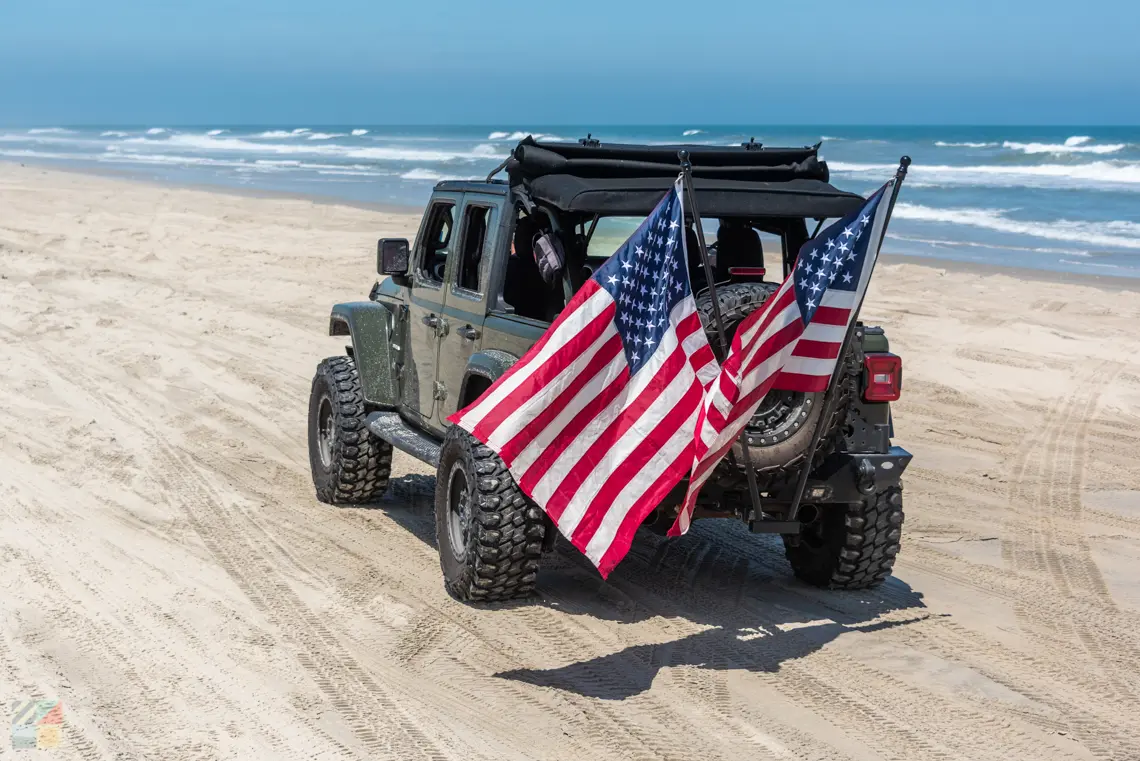
1. Check permits and rules
Verify local regulations before you arrive. Many beaches require permits or have specific seasonal closures. Check with local parks or wildlife services for current rules.
2. Adjust tire pressure
Lower your tire pressure to increase the contact patch and improve traction. Most guides recommend 20-25 PSI for firm sand, but softer sand may require even lower pressure. Always reinflate before driving on pavement.
3. Pack essential gear
Bring recovery tools just in case. A high-lift jack, traction boards, and a shovel are critical if you get stuck. Also, pack extra water, a first-aid kit, and a fully charged phone.
4. Wash your vehicle
Salt and sand corrode metal and damage paint. Rinse your vehicle thoroughly after your trip, focusing on the undercarriage and wheel wells.
No comments yet. Be the first to share your thoughts!