

Check local rules before you drive
Beach driving safety starts with permission. Before you inflate your tires or turn the key, verify that the specific stretch of coastline you plan to visit is open to vehicles. Many beaches are strictly pedestrian zones to protect fragile dune ecosystems or prevent erosion, and driving on them can result in heavy fines.
Permit requirements vary wildly by location. Some counties require a daily or annual off-road vehicle permit, while others allow free access during specific hours. Check with the local county clerk, park service, or coastal management authority to confirm current regulations. Do not rely on general internet advice, as access rules can change daily based on weather and environmental conditions.
Avoid driving in restricted areas such as dunes, marshes, or designated wildlife habitats. These zones are often marked with signs or fencing, but ignoring them poses a significant risk to both your vehicle and the local environment. Sticking to the hard-packed wet sand and designated access points is not just a legal requirement; it is a core component of safe beach driving.
Adjust tire pressure for sand traction
Lowering your tire pressure is the single most effective change you can make for beach driving safety. On pavement, tires are firm to minimize rolling resistance. On sand, you need the opposite: a large, soft footprint that floats over the surface rather than digging in. Think of it like snowshoes for your vehicle; spreading the weight prevents the tires from sinking into the loose grains.
Lower your tire pressure while still on firm pavement. Driving on low pressure over rocks or debris will damage the sidewalls or bead. Aim for 15 to 20 PSI for most light trucks and SUVs. If you are driving a lighter passenger car, 18 to 22 PSI is usually sufficient. Use a reliable gauge to check each tire individually, as they often settle at different levels.
Once you are on the beach, drive gently for a few hundred feet to let the tires settle. Stop and check the pressure again. The heat and flexing of the sidewalls can cause the PSI to drop slightly further. Top off any tire that has dropped below your target range to ensure even traction across all four wheels.
This is the most critical safety step. Never drive on public roads or highways with 15 PSI. Low pressure causes excessive heat buildup, which can lead to tire failure. Inflate your tires back to the manufacturer’s recommended street pressure as soon as you leave the sand. Carry a portable air compressor in your vehicle to make this easy.
Driving on sand requires constant momentum. If you stop, you risk getting stuck. Keep your speed steady and avoid hard braking or sharp turns. If you must stop, do so on the firmest part of the beach, ideally near the water line where the sand is packed by the tide. Always check local regulations regarding beach access and driving hours before you go.
Drive on the hard pack near the water
Finding the right path is the most critical aspect of beach driving safety. The beach is not a uniform surface; it is a layered landscape where traction varies by inches. Your goal is to drive on the "hard pack"—the dense, wet sand left behind by the receding tide. This layer is significantly firmer than the dry, loose sand further up the beach, providing the necessary grip for your tires to move the vehicle forward without spinning.
Aim for the zone just below the high tide mark. This area offers the best balance of traction and stability. However, do not drive directly in the water or in the shallow surf. Driving too close to the waterline can lead to sudden loss of traction if the tide shifts or if you hit a deeper pocket. Additionally, staying slightly inland protects the delicate dune ecosystems and avoids disturbing nesting wildlife.
Maintain a slow, steady speed as you navigate this strip. Sudden acceleration or braking can break through the hard pack, causing you to sink into the softer sand beneath. If you feel your tires losing grip, ease off the accelerator immediately. Coasting to a stop is often safer than slamming on the brakes, which can lock your wheels and dig you in deeper.
Maintain steady speed and momentum
The most common cause of beach driving safety failures is losing momentum. Sand acts like a fluid; once your vehicle stops, it begins to sink. The goal is to keep the tires rolling over the grains without digging in. This requires a delicate balance between throttle input and vehicle weight distribution.
Accelerate smoothly
Apply gentle, consistent pressure to the accelerator. You want the tires to spin just enough to create a "bow wave" of sand in front of the tread, which provides traction. Avoid sudden jerks or flooring the pedal, as this will cause the wheels to dig a hole and bury the axle.
Coast to a stop
Braking on sand is dangerous because it locks the wheels and causes immediate bogging. If you need to slow down, lift off the gas early and let the vehicle coast. If you must brake, do so very lightly and intermittently to maintain rolling motion. Hard braking should be reserved only for emergency obstacles.
Keep moving
Never stop on soft sand unless absolutely necessary. If you feel the vehicle slowing, downshift to a lower gear (or use "L" or "1") to increase torque and keep the RPMs up. Maintaining forward motion is the single most important factor in beach driving safety.
Pack essential recovery gear
Beach driving safety depends heavily on preparedness. Sand changes how a vehicle handles, and getting stuck is a common risk even for experienced drivers. Carrying the right tools allows you to self-recover or assist others without waiting for professional help, which can be hours away in remote areas.
Pack a heavy-duty tow strap rated for your vehicle’s weight. A standard rope can snap under tension, causing injury or further damage. Include a high-lift jack or a sand-specific jack, as standard scissor jacks sink into soft ground. A wide shovel is non-negotiable for digging out tires and clearing sand from under the chassis.
Recovery boards or traction mats are essential for regaining grip when wheels spin in loose sand. They provide the necessary surface area to keep your vehicle moving. Finally, carry a tire deflator and a pressure gauge. Lowering your tire pressure increases the footprint, which is the primary technique for beach driving safety, but you must be able to adjust it precisely.
Recovery gear checklist
Use this list to ensure you have every item needed for beach driving safety before you leave.
- Heavy-duty tow strap (minimum 10,000 lb rating)
- Shovel with a sturdy handle
- Recovery boards or traction mats
- Tire deflator tool
- Tire pressure gauge
- High-lift jack or sand-rated jack
- Gloves for handling dirty equipment
Common mistakes that get you stuck
Beach driving safety relies on respecting the terrain’s limits. Most recoveries start with fixing a preventable error. Avoid these three habits to stay mobile and keep your beach driving safety intact.
Driving in wet sand. Wet sand looks firm but collapses under weight. You will sink quickly and need a tow. Only drive on dry, packed sand where your tires leave clear, shallow tracks.
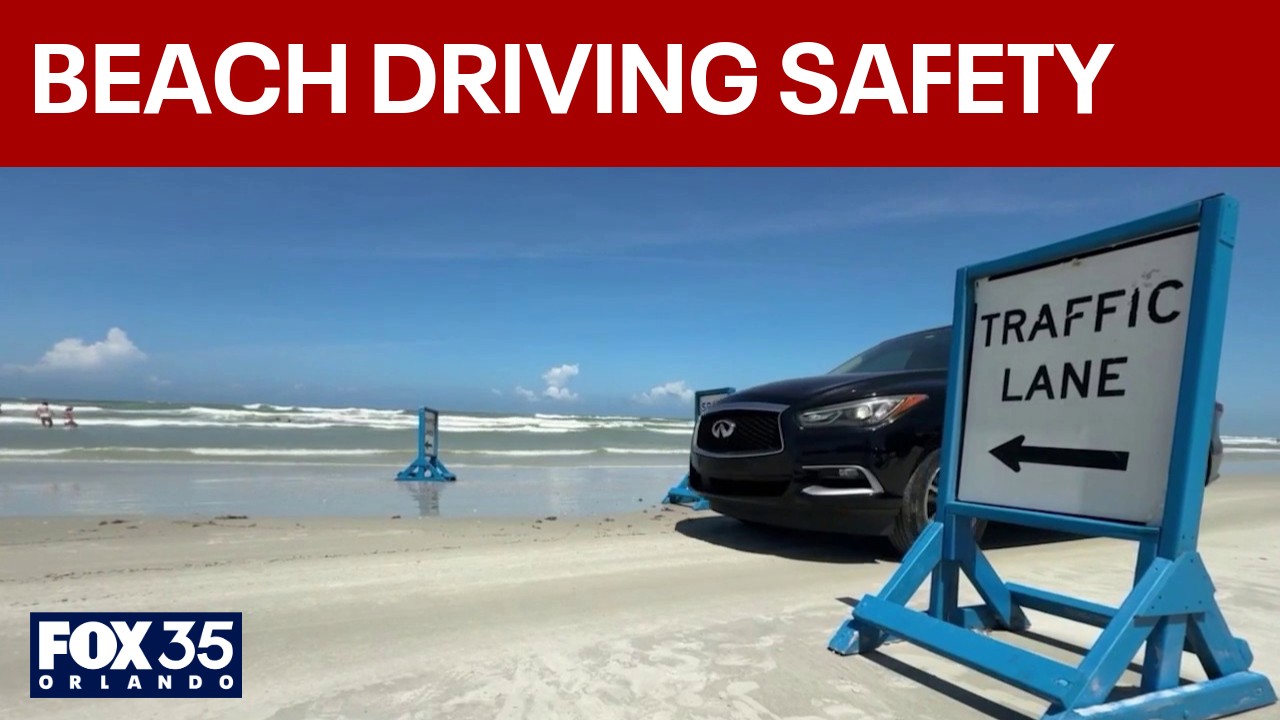
Hard braking. Sand offers low traction, so sudden stops send you sliding into a rut. Coast to a stop when possible and brake gently. If you must stop, do so in a designated area, not in a traffic lane.
Stopping in traffic lanes. Impeding traffic endangers you and others. Do not set up chairs, dig holes, or build structures in driving lanes. Pull completely off the path before stopping.
Frequently asked questions about beach driving safety
Is it safe to drive a car on the beach?
Driving on the beach is safe if you follow basic beach driving safety rules, but it carries higher risks than paved roads. Loose sand reduces traction, and wet sand near the tide line can swallow vehicles quickly. Stick to dry, packed sand above the high-tide mark and avoid driving in dunes or soft, wet areas. If you have never driven on sand before, consider practicing in an open area first or joining a guided tour to build confidence.
What speed should I drive on the beach?
Maintain a slow and steady speed, generally staying below 25 mph. Sudden acceleration or hard braking can cause you to lose traction and get stuck. Instead of braking sharply, coast to a stop when possible to keep momentum and prevent digging into the sand. Driving too fast also reduces your ability to react to hidden obstacles, other beachgoers, or sudden changes in sand density.
What tire pressure is best for beach driving?
Lowering your tire pressure increases the surface area of your tires, allowing them to "float" on top of the sand rather than sinking in. Most experts recommend dropping pressure to 15–20 psi, but always check your vehicle manufacturer's guidelines and local regulations first. Remember to reinflate your tires before leaving the beach to drive safely on pavement.
What recovery gear should I bring?
Always pack a recovery kit just in case you get stuck. Essential items include a tow strap or rope, a shovel, and a pair of traction boards or boards made from plywood. A tire deflator and a portable air compressor are also helpful for adjusting pressure on the spot. Having these tools ready ensures you can self-rescue or assist others without waiting for external help.
Can I drive on the beach with a regular car?
While four-wheel drive vehicles handle sand better, a standard two-wheel-drive car can drive on the beach if the sand is firm and dry. Avoid wet sand, deep ruts, or steep inclines, as these are difficult to navigate without four-wheel traction. If you are unsure about your vehicle's capability, stick to designated driving areas and avoid venturing onto soft, unconsolidated sand.
No comments yet. Be the first to share your thoughts!