

Check permits and tide charts first
Before you turn the key, verify that you are legally allowed to drive on the specific stretch of sand. Beach driving regulations vary wildly by location and season. In places like Cape Cod National Seashore, you need a specific oversand permit and must stay within marked corridors to protect dune ecosystems. Other areas, like parts of the Outer Banks, allow year-round driving but require daily passes or seasonal permits. Driving without proper authorization can result in hefty fines and towing fees.
Equally important is the tide schedule. The beach is not a static road; it changes shape with the water. Plan your drive for low tide or when the water is receding. This gives you access to the hard-packed sand near the waterline, which offers the best traction. If you get caught by a rising tide, you risk getting bogged down in soft, wet sand or, in extreme cases, being swept away. Local parks websites or tide apps provide accurate, real-time data for your specific location. Always check the forecast before you leave home.
Lower tire pressure for better traction
Deflating your tires is the single most important adjustment for off-road beach driving. Standard tire pressures (30–35 PSI) create a small contact patch that causes tires to float on top of loose sand. By lowering the pressure, you allow the tire to flatten slightly, increasing the surface area that grips the ground. This wider footprint distributes your vehicle's weight more evenly, preventing it from sinking and bogging down.
The goal is to reach a pressure range of 15 to 17 PSI. This sweet spot provides enough sidewall stiffness to keep the bead seated on the rim while maximizing traction. Going lower than 15 PSI risks damaging the wheel rims or tearing the tire bead off the rim, especially if you hit a hidden hard pack or shell. Always deflate your tires before you enter the sand, while you are still on firm ground.
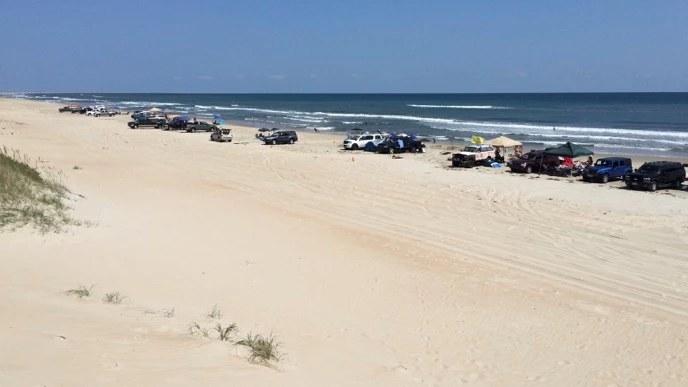
Use a reliable digital tire gauge to measure the cold pressure of all four tires. Record these baseline numbers so you know exactly how much air to release. Do not rely on the tire’s sidewall maximum pressure rating; that number is for a fully loaded vehicle on pavement, not for off-road sand driving.
Press the valve stem core with your gauge or a small tool to let air out in short bursts. Check the pressure frequently after each burst. Aim for 15–17 PSI on all four tires. Uneven pressure between the left and right sides can cause the vehicle to pull to one side, making steering difficult on the beach.
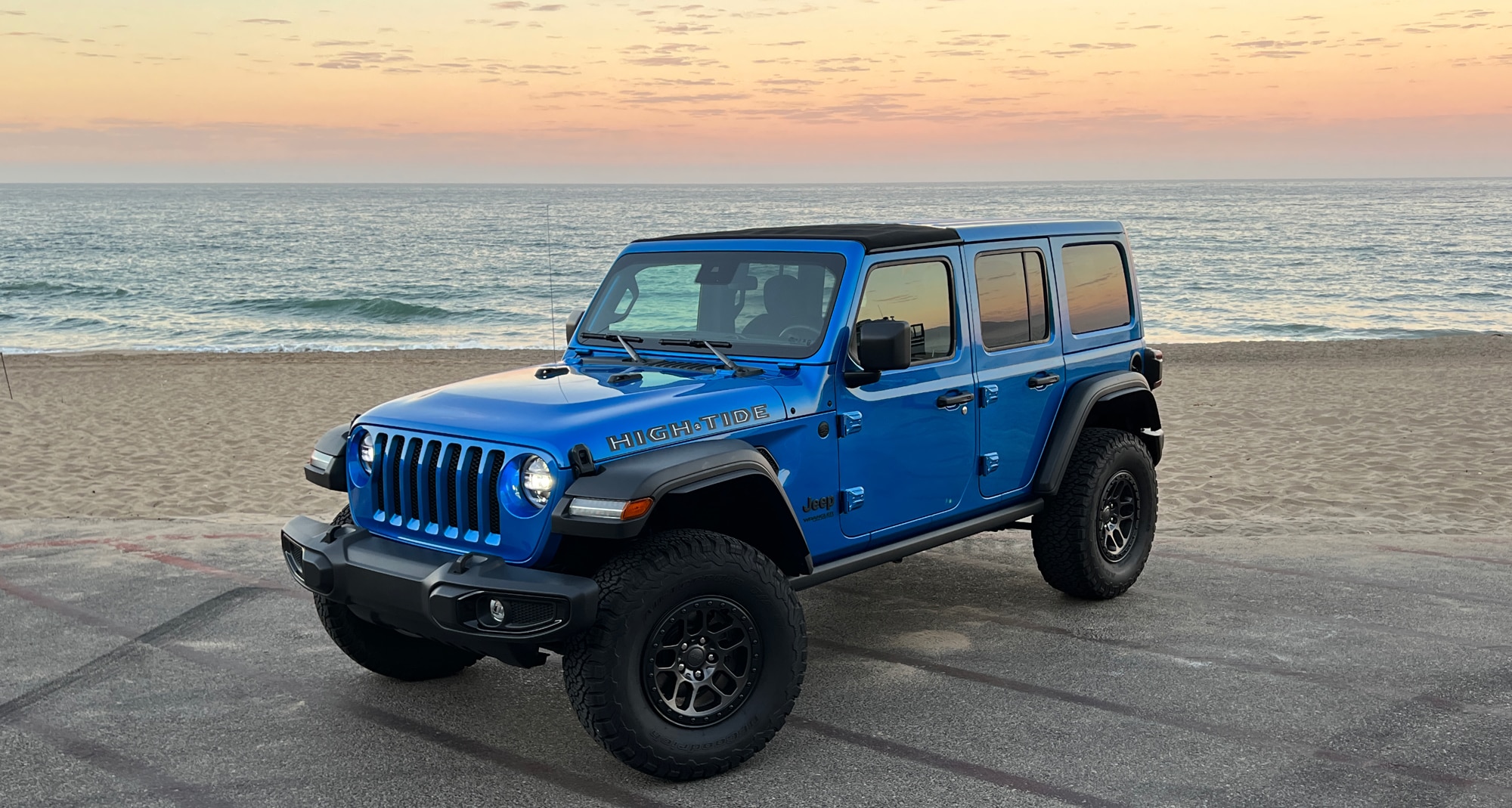
Once deflated, drive slowly and smoothly. Avoid sudden acceleration, hard braking, or sharp steering inputs. The lower pressure gives you more grip, but it also makes the tires more susceptible to rim damage from obstacles. If you encounter hard-packed sections or wet sand, you may need to stop and re-inflate slightly to maintain control.
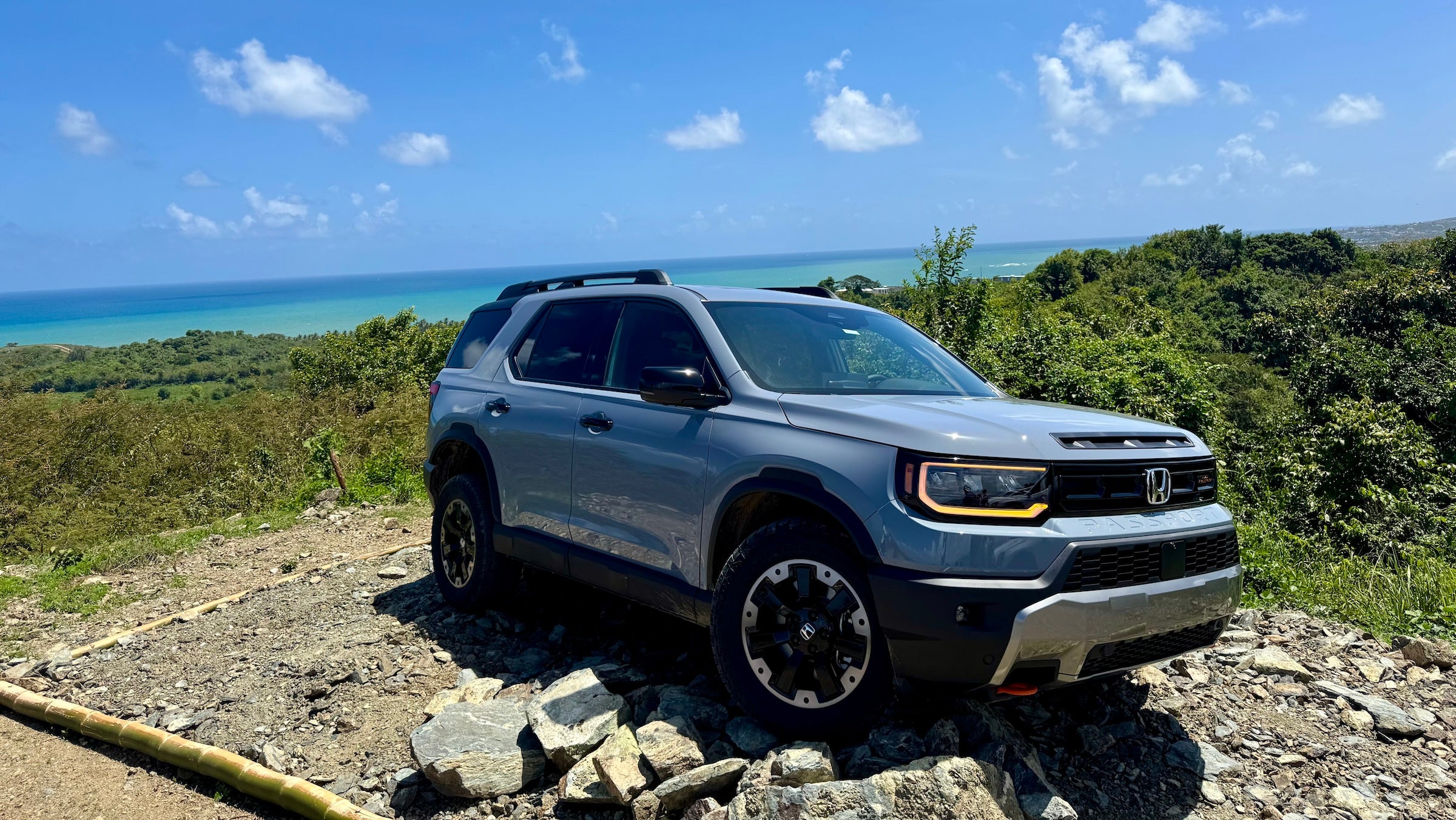
Before you return to pavement or firm sand, inflate your tires back to the manufacturer’s recommended pressure. Driving on hard surfaces with low tire pressure generates excessive heat, which can lead to tire failure. Use a portable air compressor to restore the correct PSI as soon as you exit the beach area.
Select the right 4x4 settings
Your vehicle’s drivetrain controls how much power reaches the wheels, but beach driving demands a specific approach to avoid digging in. The most common mistake beginners make is selecting the wrong gear range for the terrain. While 4Lo (four-wheel drive low) is essential for rock crawling or steep mud, it is generally the wrong choice for open sand.
Stick to 4Hi (four-wheel drive high) for beach driving. This setting provides enough torque to maintain momentum without over-gearing your vehicle. 4Lo multiplies torque significantly, which can cause your wheels to spin faster than the sand can support, leading to rapid bogging. You want steady, consistent power, not explosive bursts that dig you deeper.
Shift into 4Hi only when you are ready to drive. Engaging it while stationary or at high speeds can damage your transfer case. Once in 4Hi, focus on maintaining a steady speed. Momentum is your best friend on sand; stopping often means starting again from a standstill, which increases the risk of getting stuck. Keep your foot steady and let the 4Hi system distribute power evenly to all four wheels.
Pack essential recovery gear
Off-road beach driving demands more than just a capable vehicle; it requires a safety net for the moments when traction fails. Sand is unforgiving, and a minor mistake can leave you stranded miles from the nearest paved road. Carrying the right recovery equipment transforms a potential crisis into a manageable inconvenience.
Start with traction aids. Recovery boards or sand ladders provide the immediate grip needed to roll your tires out of a soft patch. Pair these with a heavy-duty tow strap—never a bungee cord—and a shovel. A wide, metal shovel digs deeper into sand than a plastic one, allowing you to clear packing around your tires quickly. Finally, bring a portable air compressor. Lowering your tire pressure increases the footprint and improves flotation, and reinflating them before you hit the pavement is critical for safety.
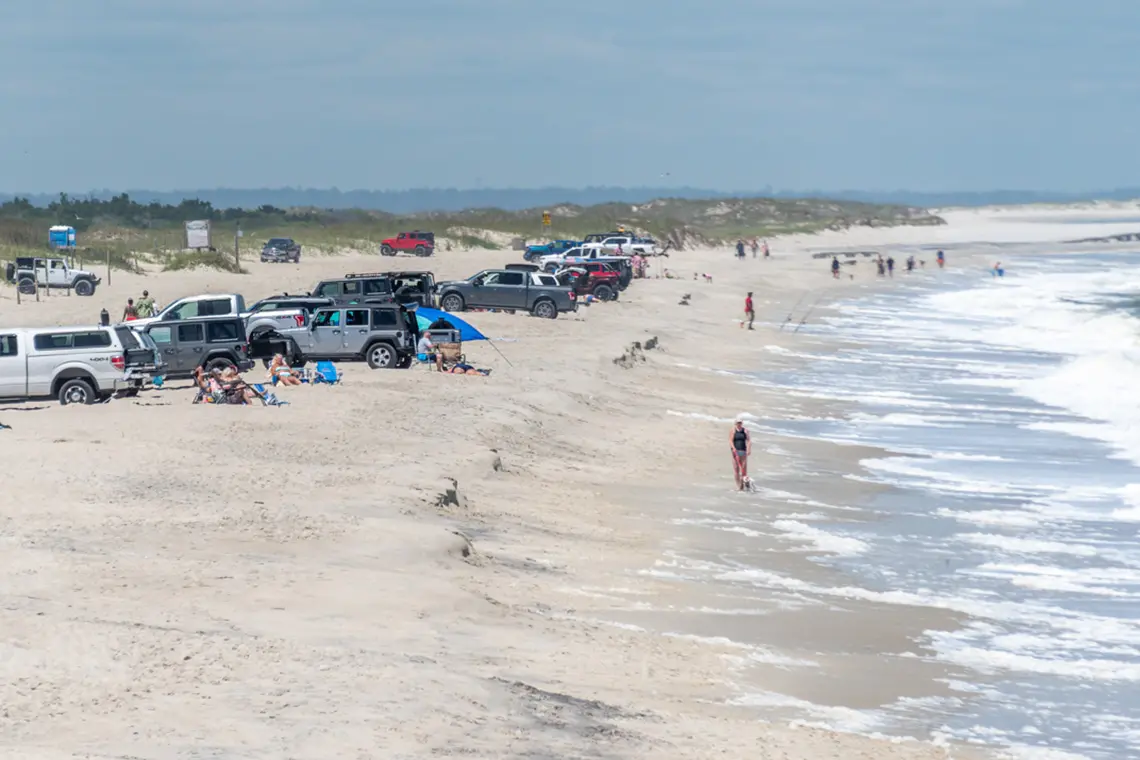
The following items are the standard toolkit for handling beach driving emergencies. These queries will help you find the most reliable options available.


As an Amazon Associate, we may earn from qualifying purchases.
Always keep a first-aid kit and a communication device within reach. Cell service is unreliable on remote stretches of beach, so consider a satellite messenger if you plan to go far off the beaten path. Preparing your gear list before you arrive ensures you can focus on the drive, not the rescue.
Drive with momentum and smooth inputs
Off-road beach driving relies on momentum. Unlike paved roads, sand doesn't offer consistent grip. Sudden changes in speed or direction can break traction and sink your tires deeper into the soft surface.
Maintain a steady, moderate speed. This keeps your vehicle's weight distributed and helps it glide over the sand rather than digging in. Avoid accelerating hard or braking suddenly. Instead, use gentle, progressive inputs on the throttle and brakes. If you feel the vehicle slowing down, ease off the throttle slightly to let it regain speed without spinning the wheels.
Steering requires the same smoothness. Sharp turns can cause the front tires to plow into the sand, creating resistance that stalls your momentum. Make gradual adjustments to your heading. Think of the steering wheel as a dial, not a switch. Small, continuous corrections keep you on track without losing forward motion.
FAQs about beach driving safety
Do you use 4WD low when driving on the beach?
No. Stick to 4Hi for beach driving. 4Lo provides too much torque for loose sand, causing you to bog down and dig deeper quickly. If you start to get stuck, do not rev the engine or spin your wheels, as this only accelerates the problem.
Can you drive on the beach with 4WD?
Yes, but your vehicle needs specific specs. You need at least 7.5 inches of ground clearance to avoid getting high-centered on dunes or hardpack. While 4WD helps, all-wheel drive vehicles often lack the clearance needed for serious off-road beach driving.
What tire pressure is best for sand?
Lowering your tire pressure to 15-17 psi increases the contact patch, allowing the tires to float on top of the sand rather than cutting into it. Always check your tire wall thickness before deflating, as some tires may not handle such low pressures safely.
No comments yet. Be the first to share your thoughts!