

Check seasonal access dates first
Beach driving is rarely a year-round right. Most coastal municipalities treat the shoreline as a shared resource, shifting access windows to protect wildlife, manage tourism, and preserve the sand. Before you plan your trip, you must verify the specific open and closed dates for your destination.
In many popular spots, the beach is closed to vehicles during nesting season. This period typically runs from spring through early fall. Driving during these months is often illegal and carries heavy fines. For example, in St. Johns County, Florida, beach driving passes are only required and valid from March 1 through September 30. Outside these dates, vehicle access may be restricted or prohibited entirely to protect sea turtle eggs and shorebird habitats.
Other regions operate on different calendars. In the Outer Banks of North Carolina, Hatteras Island allows year-round driving, while nearby Nags Head and Kill Devil Hills restrict access to October 1 through April 30. These variations mean that a permit valid in one town might be useless just miles down the coast.
Treat seasonal dates as your first checkpoint. A quick review of the local parks department or official tourism website will save you from towing fees or legal trouble. If the beach is closed, your vehicle stays at home or in the hotel parking lot, no matter how much you want to drive on the sand.
Get the right beach driving permit
You cannot legally drive on most public beaches without a valid permit. The process is straightforward but requires specific steps to ensure your pass is active and properly displayed. Start by determining which jurisdiction covers your target beach, as rules vary significantly between counties and states.
Watch the mandatory safety video
Before purchasing a pass, most jurisdictions require you to complete a short educational module. For example, the Outer Banks mandates a 10-minute video covering beach driving rules and regulations. This step ensures you understand sand conditions, wildlife protection, and right-of-way protocols. Do not skip this; it is often a prerequisite for accessing the purchase portal.
Purchase your pass online or in person
Once the video is complete, you can buy your permit. Many areas, such as St. Johns County, offer both annual and daily passes. You can purchase these online through official county websites or at designated toll booth locations during peak season (typically March through September). Ensure you select the correct pass type based on your planned duration of use.
Display the permit visibly
After purchase, you must physically display the permit on your vehicle. This usually involves placing a decal or card on the dashboard or windshield where it is clearly visible from the outside. Failure to display the permit correctly can result in fines, even if you have a valid digital record. Keep a copy of your receipt in the glove compartment as backup proof of purchase.
Adjust tire pressure and vehicle settings
Getting stuck on soft sand usually comes down to one thing: tire pressure. Properly airing down your tires increases the contact patch, allowing the vehicle to float over the surface rather than digging in. This is the most critical mechanical adjustment you will make before hitting the dunes.
Set the correct PSI for your vehicle
Target tire pressure depends on your vehicle’s weight class. Most SUVs and half-ton 4x4s perform best between 15 and 20 PSI. If you are driving a heavier three-quarter-ton truck, aim for 35 PSI to maintain stability without sacrificing traction.
Adjusting pressure requires patience. Use a reliable digital gauge to check each tire individually. If you do not have a portable air compressor, locate the nearest beach air station before you begin your drive. Over-inflating reduces traction, while under-inflating risks damaging the wheel rims.
Configure 4WD and traction systems
Once your tires are set, adjust your drivetrain. Engage 4WD Low for steep dune crossings or deep, wet sand where maximum torque is needed. For firm, dry sand, 4WD High is usually sufficient.
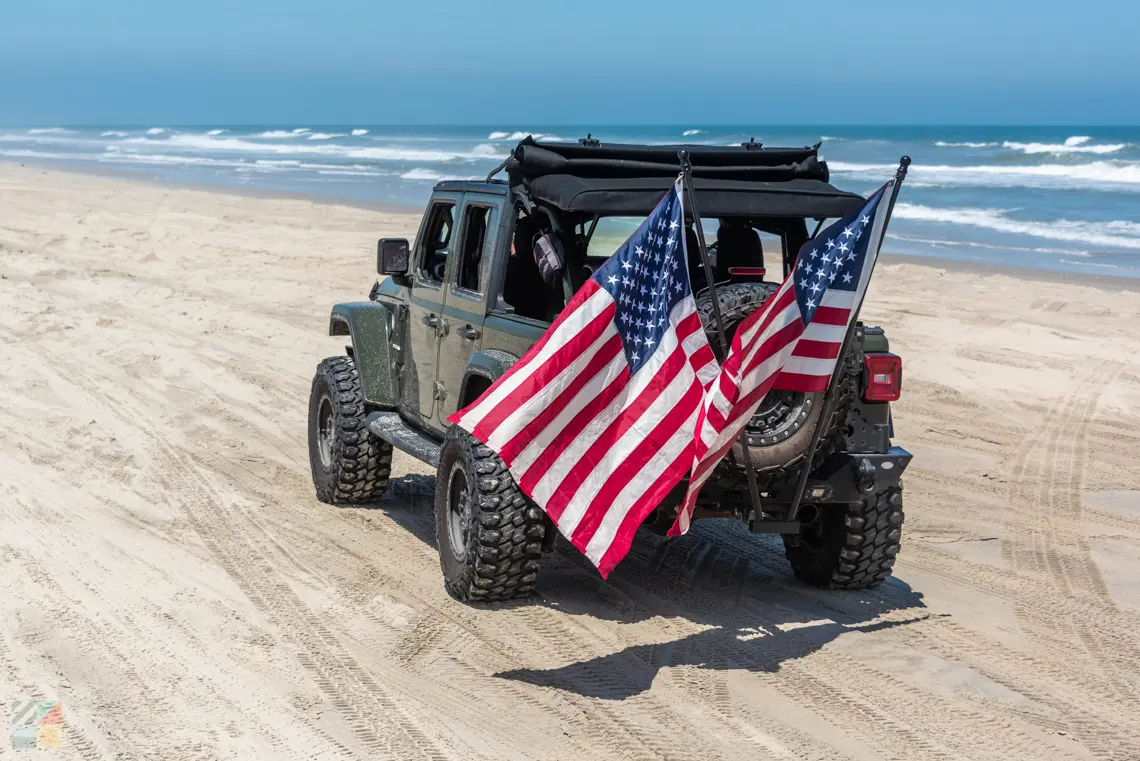
Shift into 4WD Low only when moving slowly or stopped. This provides the power needed to climb steep banks or pull out if you sink. Avoid using Low range at high speeds.
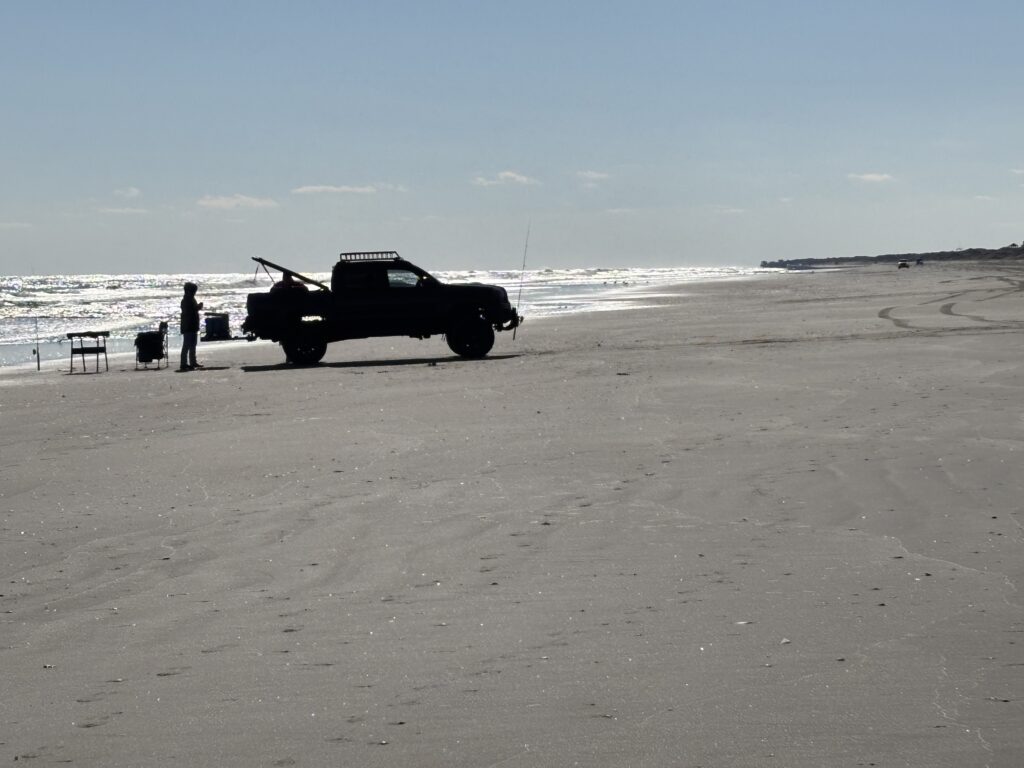
Most modern vehicles benefit from disabling traction control or stability assist on loose sand. These systems can cut engine power when they detect wheel slip, which is normal in sand but counterproductive when you need momentum to keep moving.
Maintain a steady, moderate speed. Sudden acceleration or hard braking can cause loss of control. Look ahead for ruts or other vehicles to adjust your path early.
Follow safe driving practices on sand
Driving on loose sand requires a different approach than pavement. Adjust your speed, stay in your lane, and respect the environment to keep the beach open for everyone.
Adjust speed and traction
Reduce your speed to between 15 and 20 mph. High speeds cause tires to bounce and lose traction, leading to rollovers or getting stuck. Turn off traction control systems, which can interfere with wheel spin needed to maintain momentum on soft surfaces. Drive slowly and steadily, avoiding sudden acceleration or hard braking.

Stay in designated lanes
Most beaches have marked driving lanes to protect wildlife and other users. Stay within these boundaries to avoid disturbing nesting birds or sea turtles. If you must drive above the high-tide line due to sand conditions, do so carefully and return to the lower beach as soon as possible. Never cross dunes or drive over beach vegetation, as this causes irreversible damage to the coastal ecosystem.
Respect dunes and vegetation
Dunes act as natural barriers against storm surges and erosion. Driving over them breaks the root systems that hold the sand together, weakening the beach’s defense against weather events. If you spot any signs, markers, or vegetation, give them a wide berth. If you accidentally cross a dune, stop immediately and report it to local authorities so repairs can be made.
Avoid common beach driving mistakes
Even experienced drivers can get into trouble on the sand. Most recovery situations stem from simple errors like ignoring tide schedules or driving too far up the beach. These mistakes often lead to expensive fines or require heavy equipment to extract a stuck vehicle.
Check tide charts before you start
The ocean is the biggest variable on the beach. A rising tide can turn a wide, firm stretch of sand into a quicksand trap in less than an hour. Always check the local tide schedule for your specific beach segment before you leave home. If the tide is coming in, stay well below the high-tide line. Never drive over dunes or beach vegetation, as this is illegal in most jurisdictions and causes lasting environmental damage. The Florida Fish and Wildlife Conservation Commission advises staying on the lower beach whenever possible to avoid both wildlife hazards and sudden water encroachment [src-serp-8].
Drive on the firm, wet sand
Sand compaction varies significantly across the beach face. Driving on the dry, upper beach increases the risk of getting high-centered or bogged down. The wet sand near the waterline is usually more compact and offers better traction. Aim your vehicle between the high-tide line and the dunes. If you must drive above the high-tide line due to beach conditions, do so with extreme caution and keep your speed low. Avoid sudden acceleration or hard braking, which can dig your tires in deeper.
Maintain steady momentum
Stopping on soft sand is a recipe for disaster. Once you lose momentum, it is very difficult to get moving again without spinning your tires and digging a hole. Keep a steady, moderate speed while driving. If you feel the vehicle slowing down, do not panic and slam on the gas. Instead, ease off the accelerator slightly to let the tires regain grip, then gently accelerate again. If you do get stuck, stop spinning your tires immediately to avoid burying your vehicle further.
Prepare your beach driving checklist
Before you launch your vehicle onto the sand, verify that your permit, gear, and vehicle settings are ready. A quick review prevents costly fines or getting stuck in the soft surf.
Gather permits and documents
Secure the correct beach driving pass for your destination and dates. Many areas, like St. Johns County, require annual or daily passes purchased at toll booths or online. Some jurisdictions, such as the Outer Banks, mandate that drivers watch a short educational video before issuing a permit. Keep the physical or digital pass visible on your dashboard for ranger inspections.
Check tire pressure and traction
Proper tire inflation is the most critical mechanical adjustment for beach driving. Deflate your tires to 15–20 psi for standard SUVs and 4x4s to increase surface area and prevent sinking. For heavier ¾-ton trucks, aim for 35 psi. Turn off traction control to allow wheel spin if you get stuck, and ensure your vehicle has four-wheel drive engaged.
Pack essential recovery gear
Bring a heavy-duty shovel, a traction board set, and a tow strap rated for your vehicle’s weight. Carry a tire deflator and a portable air compressor to reinflate tires after the drive. Keep a first-aid kit and extra water, as cell service is often unreliable on remote stretches.
No comments yet. Be the first to share your thoughts!