

The reality of EVs on sand
Taking an EV onto the sand isn't the same as airing down a Jeep. The weight distribution is different, and the immediate torque can dig you into a hole before you realize you're stuck. You have to change how you approach momentum and clearance.
For years, beach driving has been the domain of trucks and SUVs with robust four-wheel drive systems. Now, EVs are entering the picture, offering a quieter, zero-emission alternative. There’s been some skepticism, with questions about range, battery safety, and whether EVs can even handle the soft stuff. These concerns are valid, but with the right knowledge and preparation, electric vehicles can absolutely be enjoyed on the sand.
This isn’t about dismissing older methods, it’s about adapting them. We’ll cover everything from tire pressure adjustments specific to EV weight distribution, to managing range anxiety in a power-hungry environment. The goal is to give you the confidence and information you need for a safe and enjoyable beach driving experience with your EV.
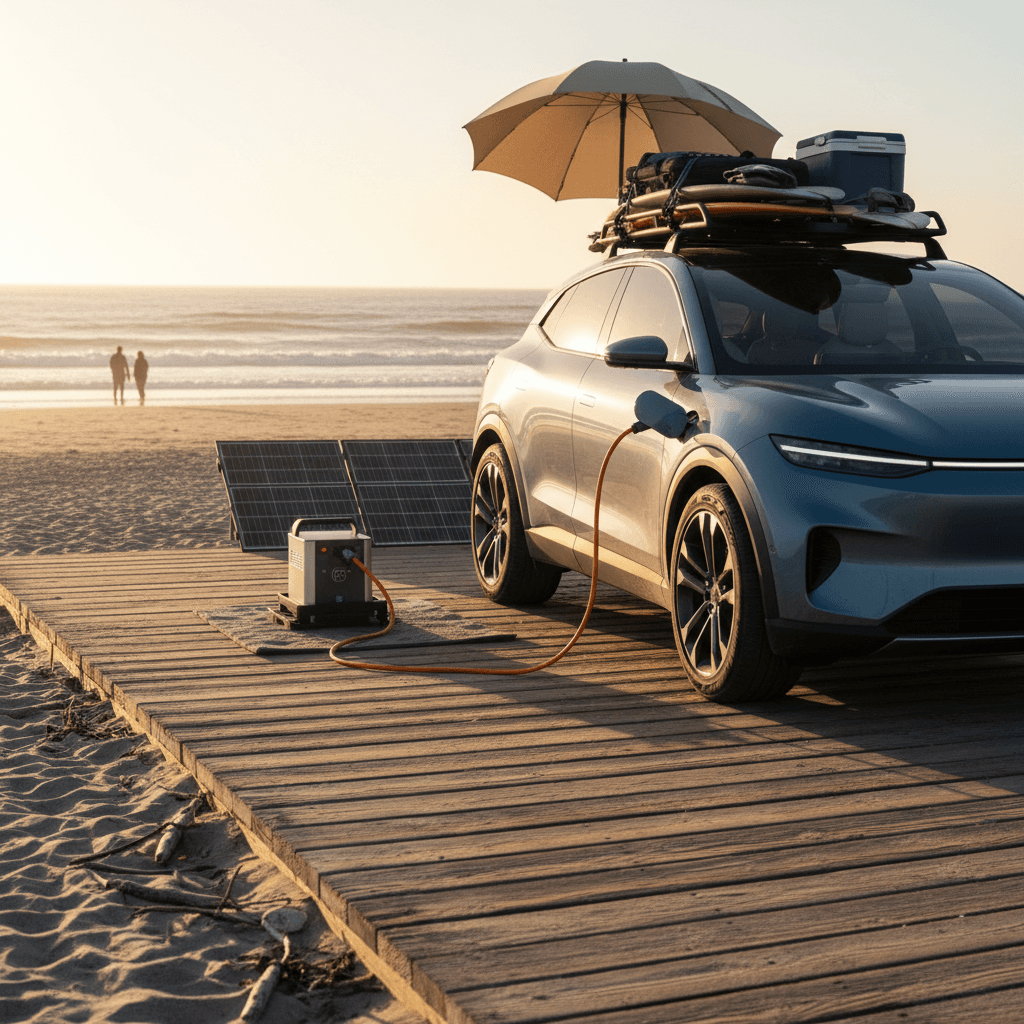
Clearance and tire pressure
Most EVs carry their weight in a heavy battery slab bolted to the chassis. This sits lower than the frame of a gas truck, making high-centering a much bigger risk. If you bottom out on a hidden rock or a steep dune crest, you aren't just denting a skid plate—you're hitting the most expensive part of the car.
The NOSMOKE, an electric beach buggy, demonstrates a design focused on overcoming this issue with increased ride height and robust undercarriage protection. But for most EVs, careful driving and understanding terrain are essential. Bottoming out isn’t just uncomfortable; it can cause serious, and expensive, damage to the battery pack, potentially voiding your warranty.
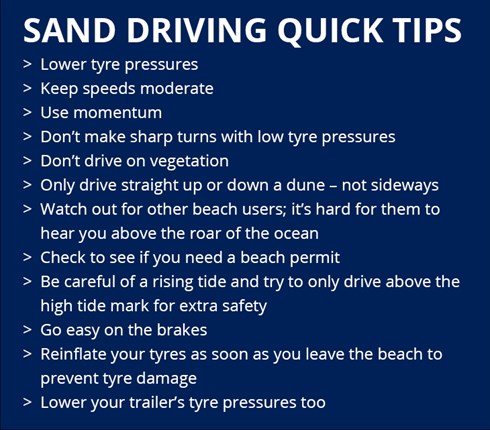
Now, let’s talk about tire pressure. Unlike road driving where higher pressure is preferred, you’ll want to reduce your tire pressure significantly when driving on sand. This increases the contact patch of the tire, distributing the vehicle's weight over a larger area and improving traction. A good starting point is around 15-20 PSI for most passenger EVs, but adjust based on tire size and vehicle weight. For example, a heavier EV with larger tires might need to go down to 12 PSI.
Always carry a portable air compressor to reinflate your tires before returning to pavement. Driving on underinflated tires at highway speeds is dangerous and can damage the tires themselves. Remember to check your owner’s manual for any specific tire pressure recommendations or warnings related to off-road driving.
- Check your owner's manual for tire pressure recommendations.
- Drop 15-20 PSI immediately before hitting the soft stuff.
- Monitor tire pressure and adjust as needed based on terrain and vehicle performance.
- Reinflate tires to the correct pressure before driving on pavement.
Why sand kills your range
The biggest concern for many EV owners considering beach driving is range anxiety. Driving on sand dramatically reduces your EV’s range compared to driving on pavement. This is due to increased rolling resistance – the sand creates much more friction than a hard surface – forcing the motor to work harder.
Several factors contribute to this range reduction. Tire pressure plays a big role; lower pressure increases the contact patch but also increases rolling resistance. Driving speed is another key factor – the faster you go, the more energy you consume. Wind resistance also becomes more significant, especially on open beaches. And of course, using energy-intensive features like air conditioning will further reduce your range.
Expect your range to drop by half in deep, soft sand. If your dash says you have 200 miles of range, treat it like 100. The constant resistance of the sand forces the motors to draw high current continuously, which generates heat and drains the pack faster than almost any highway scenario.
Planning your route and conserving energy are crucial. Drive slowly and steadily, minimize AC use, and consider taking breaks to allow the battery to cool down. It's always better to overestimate your energy needs and have a buffer than to risk getting stranded.
Recovery Gear for Electric Vehicles
Traditional recovery gear – winches, tow straps, shovels – is still essential when driving on sand, even with an EV. However, there are some EV-specific considerations. Always prioritize safety and be aware of the high-voltage components in your vehicle.
When working around the battery or any high-voltage components, use non-conductive gloves and tools. Avoid contact with any damaged wiring or exposed metal. If your EV gets stuck, attempting a jump start is significantly more complex than with a gasoline car and should only be performed by someone with proper training and equipment.
Recovery boards, like those made from durable plastic, are incredibly useful for providing traction in sand. They’re lightweight, easy to carry, and can often get you unstuck without the need for a winch. A portable air compressor is also a must-have for reinflating your tires after reducing the pressure for sand driving.
It's also a good idea to carry a basic tool kit, a first-aid kit, and plenty of water and snacks. Being prepared for the unexpected is always a good idea, especially when venturing off-road.
- Insulated gloves rated for high-voltage work
- Non-conductive tools
- Recovery boards
- Portable air compressor
- Tow strap
- Shovel
- First-aid kit
- Water and snacks
Essential EV Beach Recovery Gear
- Traction Boards - Durable boards placed under spinning tires to provide grip in soft sand. Brands like MAXTRAX are commonly used.
- Shovel - A sturdy, full-size shovel is crucial for digging out tires and clearing sand from under the vehicle.
- Portable Air Compressor - Essential for re-inflating tires after lowering pressure for sand driving. Viair compressors are a popular choice.
- Tire Pressure Gauge - Accurate monitoring of tire pressure is vital for optimal performance and recovery. Digital gauges are recommended.
- Work Gloves - Protect your hands while handling recovery gear and digging in the sand. Heavy-duty work gloves are best.
- Warning Triangles or Flares - Increase visibility if you become stranded, especially during low-light conditions. Reflective triangles are a safe option.
- Tow Strap (Recovery Strap) - A heavy-duty strap designed for vehicle recovery. Ensure it has a higher working load limit than your vehicle's weight. Avoid using chains.
- D-Rings (Shackles) - Used to connect the tow strap to recovery points on both vehicles. Choose D-rings with a sufficient working load limit.
Local rules and permits
Beach driving regulations vary wildly from one location to another. What’s allowed on one beach might be strictly prohibited on another. It’s absolutely crucial to check local regulations before you head out to avoid fines, penalties, or even having your vehicle impounded.
Regulations can cover everything from permit requirements and designated driving areas to speed limits and seasonal restrictions. Some beaches may only allow driving during certain times of the year or require a special permit that can be obtained online or at a local office. Coast Buddy is a great resource for finding information on beach driving rules and regulations in many areas.
Ignoring these rules can have serious consequences. Fines can range from a few hundred dollars to over a thousand, and in some cases, you could face more severe penalties. Beyond the legal ramifications, it’s important to be a responsible beach driver and minimize your impact on the environment. Stay within designated driving areas, avoid disturbing wildlife, and pack out all of your trash.
Battery Cooling & Heat Management
Prolonged exposure to direct sunlight and heat can affect your EV’s battery performance and longevity. EV batteries operate most efficiently within a specific temperature range, and extreme heat can reduce their capacity and accelerate degradation. It’s important to understand how your EV’s thermal management system works, and its limitations.
Most EVs have sophisticated cooling systems designed to regulate battery temperature. However, these systems can be overwhelmed in extremely hot conditions. Parking in the shade whenever possible is the simplest and most effective way to mitigate this risk. If shade isn’t available, consider using a sunshade to protect the interior of the vehicle.
Overheating can also lead to reduced charging speeds. The battery management system may limit the charging rate to prevent further temperature increases. While modern EVs are designed to handle a certain amount of heat, it’s always best to take preventative measures to keep the battery cool.
Troubleshooting: What to Do When Stuck
Getting stuck in the sand is a common occurrence, even for experienced beach drivers. If your EV becomes stuck, the first thing to do is stay calm and assess the situation. Avoid sudden acceleration or aggressive steering, as this will only dig you in deeper.
Try gently rocking the vehicle back and forth between drive and reverse. This can sometimes create enough momentum to free the tires. If rocking doesn't work, place recovery boards under the drive wheels to provide traction. Ensure the boards are securely positioned and angled slightly upwards.
If you’re still unable to get unstuck, don’t hesitate to call for assistance. Many beach communities have tow services specifically equipped to handle vehicles stuck in the sand. Remember to prioritize safety and avoid putting yourself or others at risk. Repeatedly attempting to free the vehicle can overheat the motor, so it’s best to seek help if your initial efforts are unsuccessful.
- Stay calm and avoid sudden movements.
- Gently rock the vehicle back and forth.
- Use recovery boards under the drive wheels.
- Call for assistance if needed.
Electric Beach Wagons vs. Gas Beach Wagons: A Qualitative Comparison
| Environmental Impact | Noise Level | Maintenance | Cost (Initial & Ongoing) | Load Capacity |
|---|---|---|---|---|
| Low | Very Low | Moderate | Moderate to High | Comparable |
| High | High | Moderate | Moderate | Comparable |
| Zero tailpipe emissions; reduced carbon footprint. | Significantly quieter operation. | Fewer moving parts generally, but specialized EV component maintenance may be required. | EVs typically have a higher initial purchase price, but potentially lower fuel/energy costs. Battery replacement is a significant potential expense. | Generally similar, dependent on vehicle size and design. |
| Emissions contribute to air pollution and greenhouse gases. | Engine noise can be disruptive to beach environments and wildlife. | More frequent maintenance required (oil changes, spark plugs, exhaust systems etc.). | Generally lower initial purchase price, but ongoing fuel costs can be substantial. | Generally similar, dependent on vehicle size and design. |
| Potential for regenerative braking to extend range, but sand driving can be energy intensive. | Reduced noise pollution benefits beachgoers and wildlife. | Software updates and battery management systems add complexity. | Electricity costs vary significantly by location and time of day. | May be slightly affected by battery weight distribution. |
Illustrative comparison based on the article research brief. Verify current pricing, limits, and product details in the official docs before relying on it.

No comments yet. Be the first to share your thoughts!